Rishikesh works best as a three-day stay combining riverside neighbourhoods, yoga, ashrams and an optional professionally guided rafting outing. Base yourself around the area you will use most and plan crossings carefully. February–April and October–November are useful starting choices. River activities depend on current conditions and permissions, not simply the month.
Rishikesh has two very different rhythms: early classes and quiet ashram visits, then busy lanes and crowded evening ceremonies. A good itinerary allows both without expecting the entire riverside to feel secluded. Choose whether your priority is a structured yoga programme, a short cultural break or adventure. Booking a serious course and several full sightseeing days into the same stay usually does neither justice.
Geography matters here. The town centre around Triveni Ghat, the western-bank areas around Muni ki Reti and Tapovan, and Swargashram on the opposite side are separate planning clusters. A short line across the river on a map is not a usable route by itself. Confirm current bridge access, walking restrictions and the final approach to your accommodation; road transfers can take considerably longer than straight-line distance suggests.
The three days below give you a cultural day in Swargashram, a slower town-centre day and an optional adventure day. They are modular suggestions, so you can replace rafting with yoga, reading or another short riverside walk. A spiritual visit is not less complete without an adrenaline activity. Nor should a promising weather forecast override an operator’s cancellation or a local river closure.
When should you go?
Spring and autumn generally suit a combination of walking and cultural visits. Rafting has a restricted operating season and can be suspended within it; the tourism board describes a broad September–June window, which is not a guarantee of operation. Monsoon months need particular flexibility around rivers, hills and roads.
Tap a month for the tradeoff. These are editorial seasonal patterns; weather varies.
JanMixed
Cool mornings favour layers; ask about river-water and activity conditions.
FebGood
A useful time to combine gentle walks, yoga and cultural visits.
MarGood
Comfortable planning window, with advance checks for busy festival periods.
AprGood
Early walking works well; increasingly warm afternoons suit a slower pace.
MayMixed
Heat reduces comfortable walking time; keep shade and indoor breaks.
JunMixed
Hot weather and changing rainfall call for flexible activity bookings.
JulChallenging
Monsoon conditions make river adventure an unsuitable default plan.
AugChallenging
Prioritise indoor study and short visits only when local conditions allow.
SepMixed
Reopening of activities depends on permissions and river conditions.
OctGood
Often a useful outdoor window; reconfirm activities close to departure.
NovGood
Good for slower sightseeing, with a warmer layer for evenings.
DecMixed
Cool mornings and shorter days reward a relaxed, later start.
Does it fit your trip?
Five editorial suitability scores, each out of five. Open a category to see the reasoning. These are not visitor averages. How we rate.
Scenery4 / 5
Editorial suitability: river and foothill scenery are strong, but the town itself is busy.
Heritage4 / 5
Living ashram culture, worship and the Beatles connection offer several distinct interests.
Gentle cultural plans can suit families; river activities need individual eligibility checks.
Value4 / 5
Longer stays and simple meals can offer value; courses and adventure packages vary substantially.
What is the best way to get around?
The best option depends on the stops you choose. These comparisons explain the tradeoffs; routes, availability and fares need a current check.
Intercity bus or rail, then local transfer
Search official Uttarakhand Transport services for your date, or check rail connections separately. Confirm the exact arrival station or bus stop and arrange the final hotel approach. A ticket to Rishikesh does not mean arrival at the riverside neighbourhood you booked.
Useful from the airport or for an upstream activity. Confirm pickup side of the river, luggage access and return time. Ask the accommodation about the current legal vehicle route; do not rely on a pedestrian bridge shown by an old travel article.
Use the tourism board’s directory as a starting point, then verify the operator’s current authorisation and the specific activity. Ask about participant requirements, guide qualifications, equipment, rescue arrangements and cancellation terms before paying.
Combine these local day plans or use just one. Stop times are suggested visit allowances, not opening hours or travel times. Leave additional time for meals and transfers.
Day option 1: Swargashram: creative history and evening worship
Check current admission and the approach before setting out. Explore the designated paths and buildings at an unhurried pace; carry water and allow for uneven surfaces. This is a cultural visit, not a yoga-class booking.
Continue within the Swargashram area, with a meal and rest between stops. Visit only spaces open to day visitors, respect teaching or prayer in progress and ask before photographing people or interiors.
Use the late-day block for aarti only after confirming the actual seasonal time. Arrive without rushing, follow seating guidance and have the return route arranged. The suggested duration includes settling in, not a fixed ceremony length.
Begin with a respectful temple visit during permitted visitor hours. The shorter stop allows time to understand the setting without taking the entire morning. Follow current rules for shoes, clothing and interior photography.
Optional meal and short-walk context near Triveni, not a verified named market or attraction. Choose your actual restaurant or permitted walking area locally; the pin is only an area reference. The 90-minute allowance is a flexible break, not a confirmed attraction visit.
Finish beside the river in a permitted public area. If attending the local evening ceremony, verify its time and extend the break beforehand. The river view alone makes a worthwhile stop; entering the water is unnecessary.
Only go with a confirmed authorised operator, permitted conditions and an eligible group. This four-hour allowance is a planning placeholder for briefing, transfer and a suitable activity, not a guaranteed rafting duration. Replace with a pre-booked gentle yoga class if cancelled.
Return with the operator and leave time to change, eat and rest. The pin marks the neighbourhood, not a restaurant endorsement. Do not add another strenuous activity simply because the first outing ends earlier than expected.
Optional walking-break context in the Muni ki Reti area, not a verified named ghat or public route. Confirm a permitted, suitable place locally before walking; the pin is not an entrance or confirmation of riverbank access. Skip this pause if access is unclear. The 45-minute allowance is a flexible break.
Ask the hotel for its exact side of the river, nearest vehicle pickup and any steps on the approach. A cheaper room can become inconvenient if each activity requires a long crossing or taxi. Select accommodation near your main class or daily interest.
Confirm crossings on the day
Do not assume Lakshman Jhula or any other named bridge is open because it appears on a map. Ask your accommodation or local authorities for the current permitted route. These itineraries cluster stops by area to reduce dependence on repeated crossings.
Treat the Ganga as a powerful river
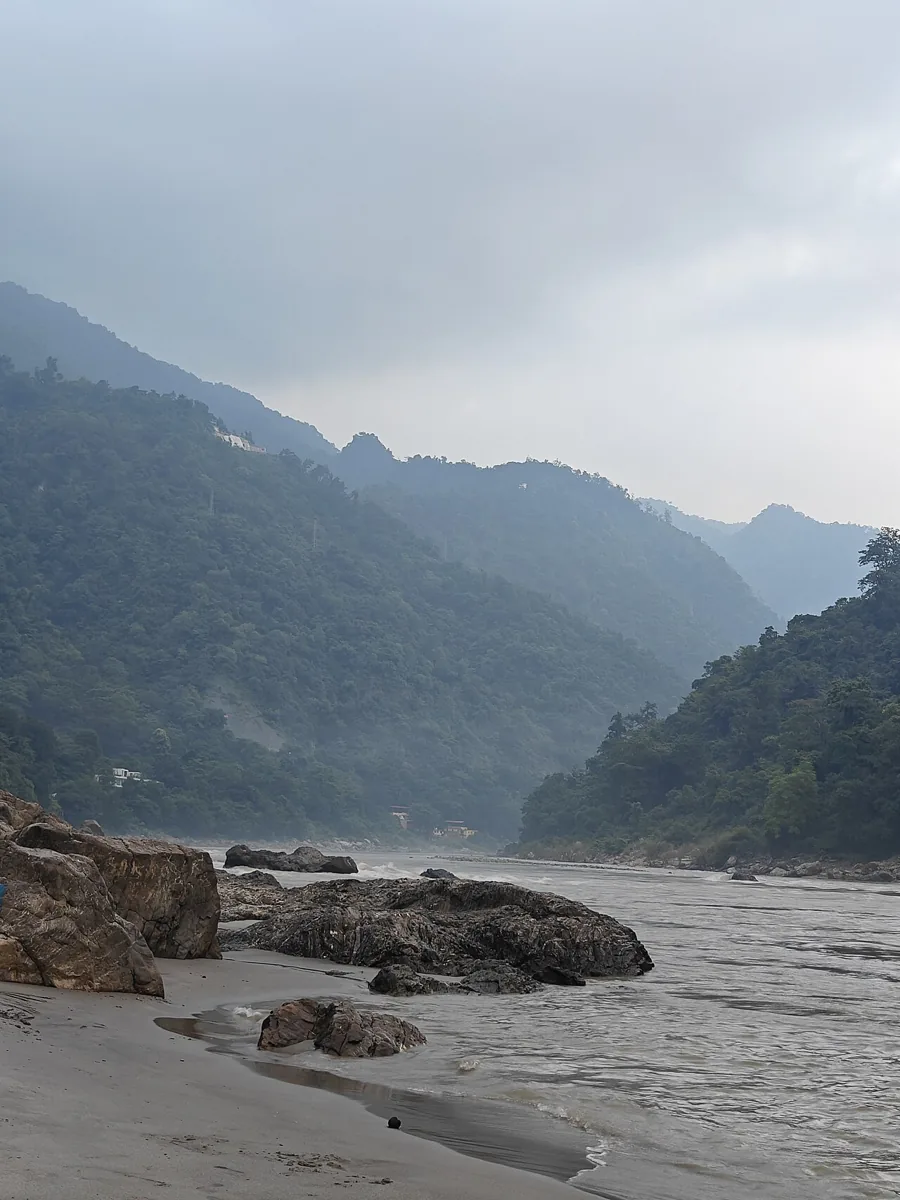
Admire the river from established public areas and follow local barriers and warnings. A sandy bank or other people entering the water does not establish safe swimming conditions. Children need close supervision near ghats, steps and unguarded edges.
Rafting is conditional, not guaranteed
Choose the permitted section to match the least confident eligible participant. Confirm fitted helmets and life jackets, a safety briefing, qualified guides and a rescue plan. Do not substitute an unlicensed operator when regulated activities are suspended or pressure someone into participation.
Attend aarti respectfully
Parmarth Niketan states its ceremony follows sunset and the time varies seasonally; confirm that day with reception. Arrive early enough to find a permitted place, keep paths clear and follow staff instructions. Leave space around families and worshippers when photographing.
Evaluate yoga before committing
For a drop-in class, ask about style, level, duration and the teacher’s approach to modifications. Tell the instructor about relevant limitations and stop movements that cause pain. A short holiday class should not be presented as medical treatment or a guaranteed transformation.
Plan the day beyond the stopwatch
Suggested minutes cover visits, not transfers or queues. Add meals, class check-in, changing after rafting and the operator’s pickup time. Book an upstream activity on a day with no tightly timed onward departure, and retain a full non-river alternative.
Your questions, answered
Can I enjoy Rishikesh without rafting?
Yes. Ashrams, aarti, yoga classes, the Beatles Ashram and neighbourhood walks make a complete short stay. The adventure day is optional and should be replaced whenever river conditions, individual eligibility or preference make rafting unsuitable.
Is the rafting season a guarantee I can book?
No. The advertised season is only a broad operating window. Local permission, water levels, weather, the chosen river section and operator decisions determine whether an activity runs. Confirm cancellation terms and keep a full alternative day available.
Should I book a hotel in Tapovan or Swargashram?
Choose the side closest to your main activities and ask about steps, luggage access and current crossings. Tapovan can suit a base around classes and activity pickups; Swargashram can suit visits around the ashrams. Neither removes the need to check the exact property approach.
Your own field notes
Visited? Record your personal category ratings for next time. They stay on this device and are not published or counted as visitor reviews.
Sources & editorial notes
Researched for TheLazyNick using the sources below. This is a source-based planning guide, not a claim of a personal visit. The suggested routes, timings and suitability scores are editorial judgements.
Source check: . Check live notices before setting off.
Distances are straight-line estimates between catalogue pins, within 30 km. Roads, entrances and walking routes may be much longer. Known closed places are excluded; inclusion does not confirm opening today.
Return with the operator and leave time to change, eat and rest. The pin marks the neighbourhood, not a restaurant endorsement. Do not add another strenuous activity simply because the first outing ends…
By Nikhil (Nick) · Editorial notes updated . Researched itinerary design; no personal review of an ashram, operator, bridge or river activity is implied.
I organised the Rishikesh days around the kind of stay a traveller wants, because a structured yoga programme, a cultural visit and an adventure break have different rhythms. Trying to complete all three at full intensity can leave very little of the quiet that attracted someone in the first place. These are researched itinerary choices, rather than personal reviews of the ashrams, activity operators or accommodation. The guide is intended to help you choose a base and a purpose before making those more specific bookings.
Geography comes next. The town-centre area, the western-bank neighbourhoods and Swargashram should be understood as planning clusters, rather than points joined by a simple line across the river. Confirm the actual crossing and the final approach to your stay. A room that looks close on a map can require a different journey when current bridge access or walking arrangements are taken into account. I would settle luggage and arrival transport before turning the rest of the visit into an attractive sequence of walks.
For a cultural day, allow the places of worship and the riverside neighbourhoods their own pace. A ceremony is not interchangeable with a sightseeing appointment, and everyday religious activity continues around visitors. Read the relevant visitor guidance and leave room for crowds and a slower departure afterwards. A second day with fewer commitments can be useful for classes, reading or a shorter walk. The purpose is not to fill every interval between meals with another attraction.
The adventure option remains a separate decision. A generally suitable season cannot confirm the state of the river, a current permission or the competence of a particular operator. Check those details with the relevant sources and an appropriately qualified provider, and respect any cancellation or restriction. If rafting is unsuitable, the trip still has a clear purpose without it. I include an optional day so the rest of the plan can survive a change, rather than making one activity the test of whether the holiday worked.
My approach would be to keep the first shortlist small: one main neighbourhood, the accommodation that supports it and the activities you care about enough to research properly. Use the guide's sources to check changing access and arrangements, and discuss the expected pace with everyone travelling. Then add a quieter alternative before booking the full schedule. Rishikesh can accommodate different interests, but a useful plan begins by recognising which of them you want to make time for on this particular visit.