From research
Is this worth your time?
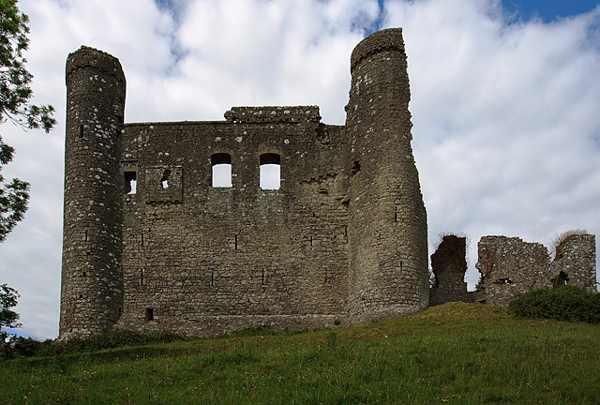
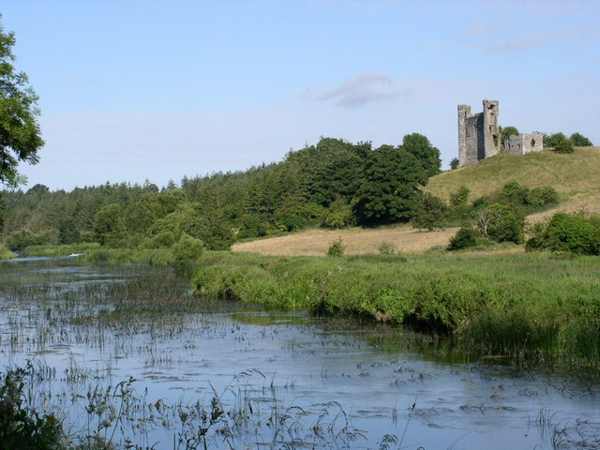
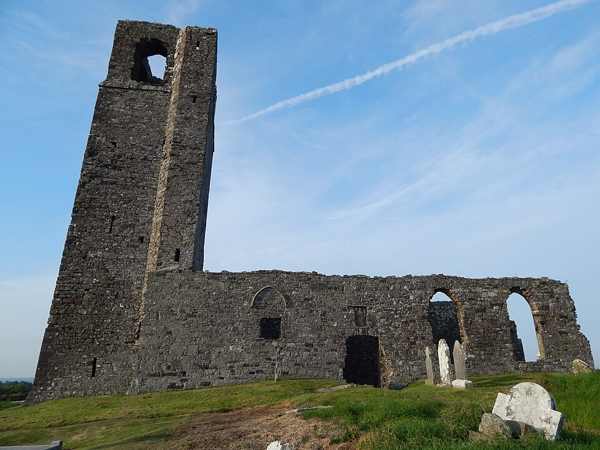
Choose Dunmoe if you enjoy imagining the organisation of a building from what survives, while keeping reconstruction distinct from observation. Look at the remaining sides and towers, then consider the relationship with the river valley. A short stop can be rewarding without entering a crypt, following the bank or seeking an exposed elevated viewpoint.
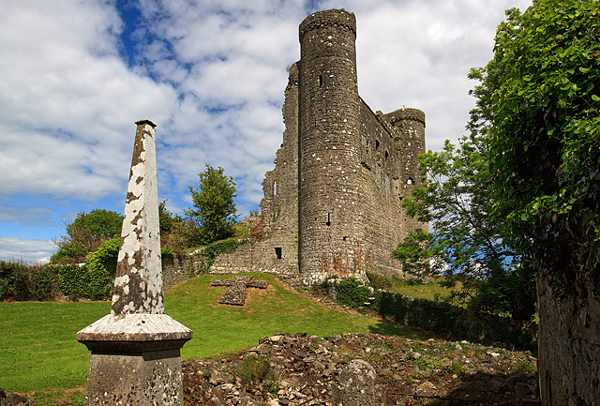
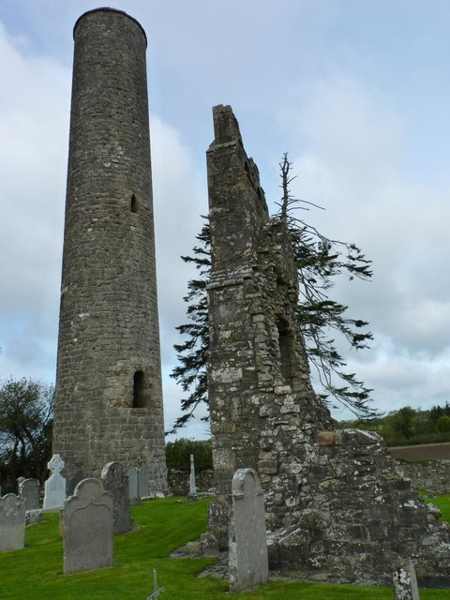
Know before you book: Nearby church and burial remains have their own boundaries. The castle’s history of conflict does not make unstable masonry or adjoining fields suitable for exploration.
The story behind the visit
The story behind the place
Dunmoe was associated with the Darcy family and a wider estate that included land, a church and a mill. The Office of Public Works considers the castle likely to be a later medieval construction in a style recalling earlier buildings. That distinction is useful when reading a ruin: an architectural form can persist or be deliberately reused, so a familiar outline does not establish a precise foundation date. The castle belonged to an inhabited and productive landscape, not simply an isolated defensive shell. Source ↗
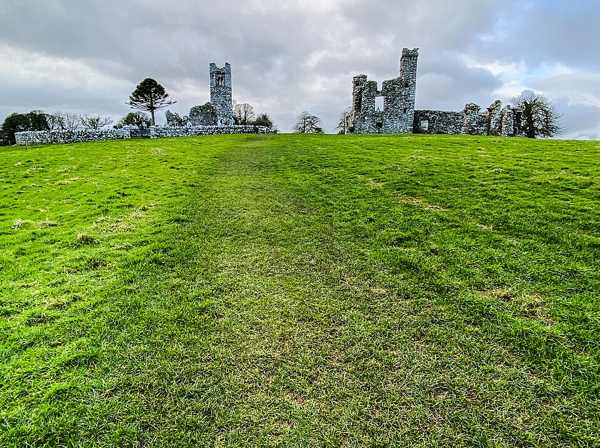
The building encountered military conflict in the seventeenth century and later suffered destructive fire during the period of the 1798 rebellion. The present fragments are the result of that long history of occupation, damage and loss. Two remaining sides can suggest the scale of the former residence without supplying its complete plan. Looking at what is absent as well as what stands helps explain why interpretation is necessary. Keep that process visual and historical: there is no need to enter unstable spaces or climb surviving fabric to appreciate the castle’s relationship with the Boyne and the estate landscape around it. Source ↗