From research
Is this worth your time?
Choose Donaghmore if you enjoy a compact site with several kinds of surviving evidence. The tower gives an immediate landmark, but the church and carved stones add detail at ground level. A short visit works best when you distinguish foundation tradition, medieval construction and later alteration instead of assigning everything to one early date.
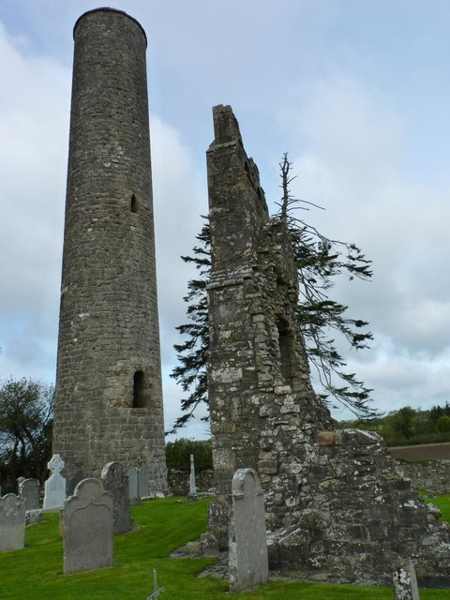
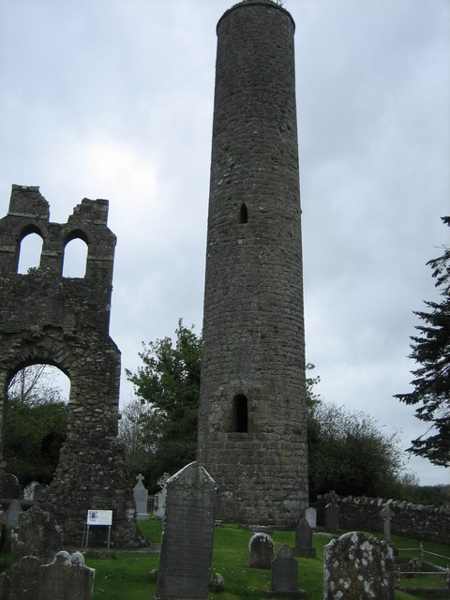
Know before you book: The tower’s missing pointed cap and modified upper windows belong to its history. They do not provide an accessible viewing platform or a route into the structure.
The story behind the visit
The story behind the place
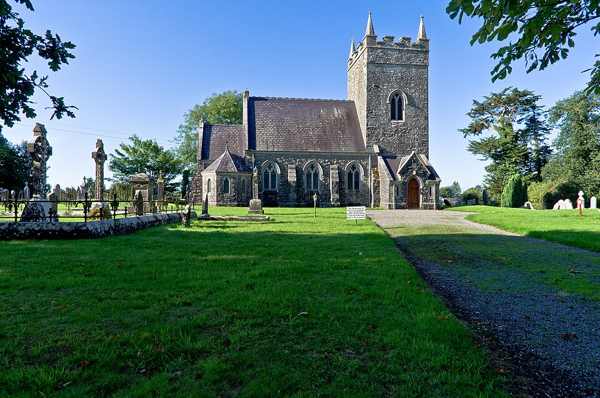
Tradition associates the foundation of Donaghmore with St Patrick and the early abbot Cassanus. The visible buildings belong to later stages of the site’s development, so the foundation story and the age of the standing tower should not be treated as the same event. The church became a parish church during the medieval period and underwent further change. The authority’s account therefore presents a place with a long sequence of religious use rather than a single building campaign preserved intact. Source ↗
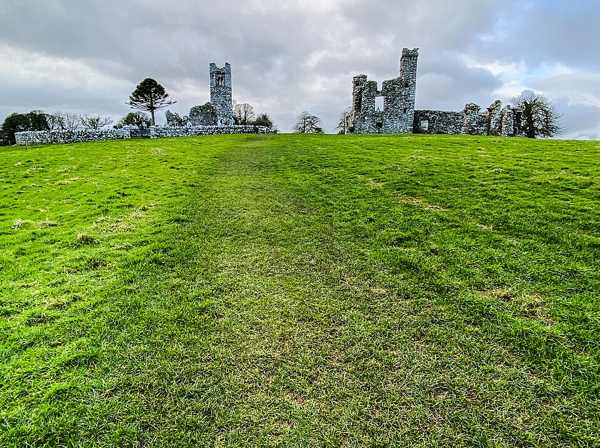
The round tower carries unusual carved details at its doorway and has lost its conical cap. Some upper openings were blocked during nineteenth-century intervention, adding another layer to its present appearance. The carved slabs around the enclosure preserve different forms of commemoration alongside the larger structures. Viewed together, these features show why a churchyard deserves more than a quick photograph of its tallest building. Look at the tower, church and stones as related but distinct evidence, while leaving interpretation of inaccessible spaces to the monument record rather than trying to explore them physically. Source ↗