The story behind the visit
The story behind the place
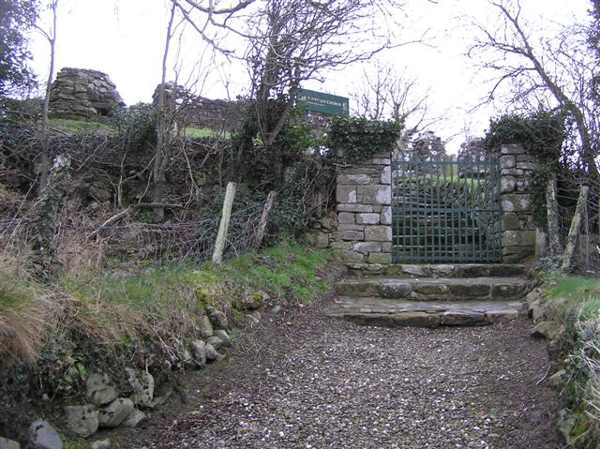
A timber church, described as a dertech, is recorded at Bovevagh in 1100. The present stone church ruin belongs to the medieval parish church and includes later alterations. Although it was reported ruined in 1622, it was repaired and remained in use into the nineteenth century. These changes make the site a record of repeated use rather than a single abandoned building campaign. The surviving openings and walls should therefore be considered as parts of a structure that was adapted and maintained over a long period. Source ↗
The small mortuary house adds a different kind of religious monument beside the church. Its body-shaped cavity and hand-hole are associated with the keeping of relics, while its rubble walls and slab roof give it a compact form. The Department for Communities compares it with the better-known tomb at Banagher, describing Bovevagh’s example as simpler but of the same general type. The two sites are distinct places. Looking at the church and mortuary house together shows how worship, burial and the veneration of sacred remains could leave different kinds of structure within one religious landscape. Source ↗