From research
Is this worth your time?
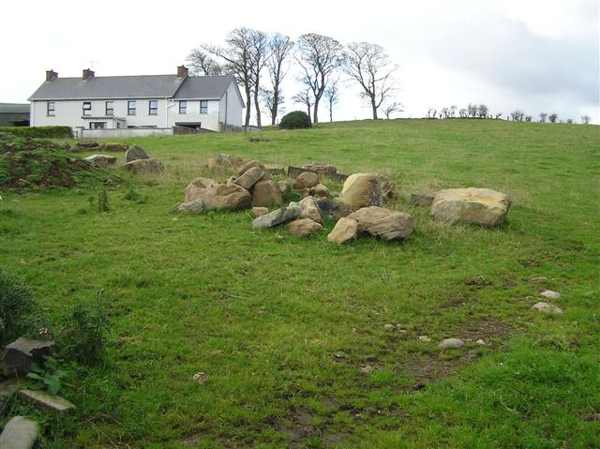
Choose Knockoneill for a focused archaeological stop where the arrangement matters more than the size of a monument. Look first at the forecourt and main gallery, then identify the additional chamber from permitted ground. A slow visit helps distinguish phases and connections without squeezing into confined spaces or inventing a complete prehistoric reconstruction.
Know before you book: View the chamber layout from permitted ground; no climbing, stone moving or informal field circuit.
The story behind the visit
The story behind the place
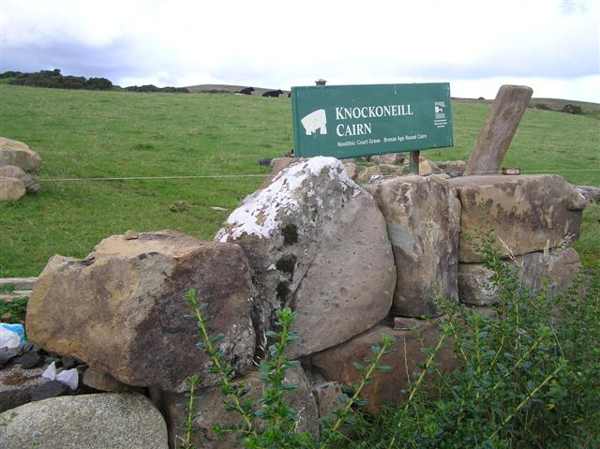
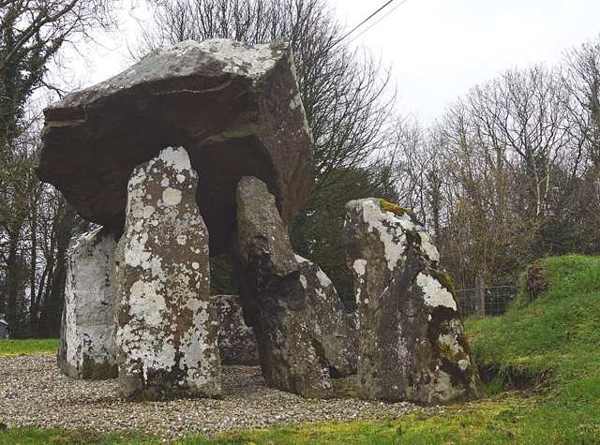
Knockoneill dates to the Neolithic, with the monument authority giving a broad range of roughly 4000–2500 BC. Its forecourt and gallery place it within the court-tomb tradition, but the subsidiary chamber adds an unusual feature. The rear stone of the main gallery also serves as a side stone for that extra chamber, making the relationship between the spaces particularly worth observing. Source ↗
Excavations during the twentieth century recovered material indicating later activity, including charred bone and a Bronze Age urn. The monument may have continued in use as a round cairn. Those findings caution against reading the visible remains as a single unchanged design from one moment in prehistory. Start with the main arrangement, then consider the additional chamber and later evidence. The visit does not require certainty about every lost feature or burial practice. A measured circuit on authorised ground can reveal enough to make the stop worthwhile. Leave the stones and surfaces untouched, keep adjoining land outside the plan and respect any conservation restriction that temporarily changes ordinary public access. Source ↗