From research
Is this worth your time?
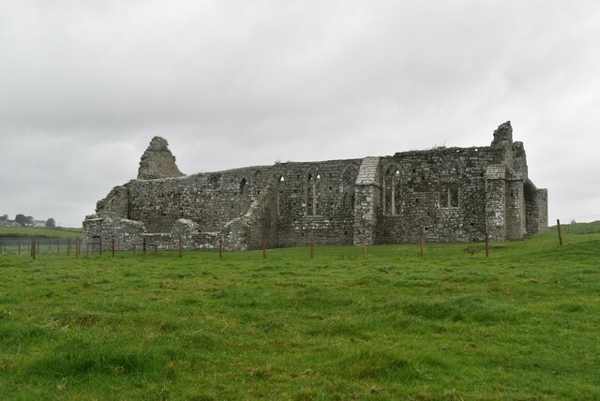
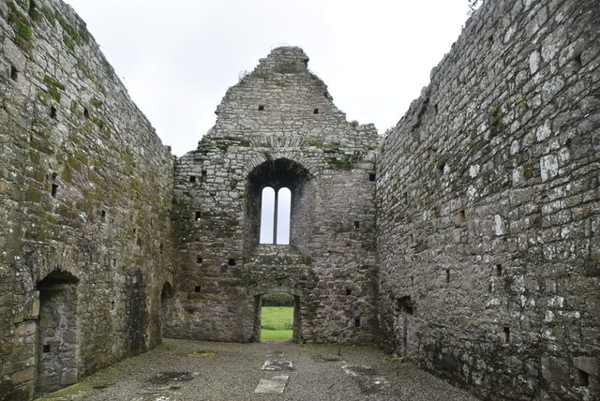
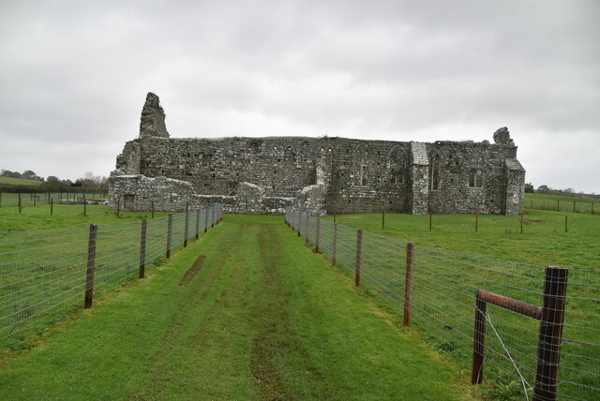
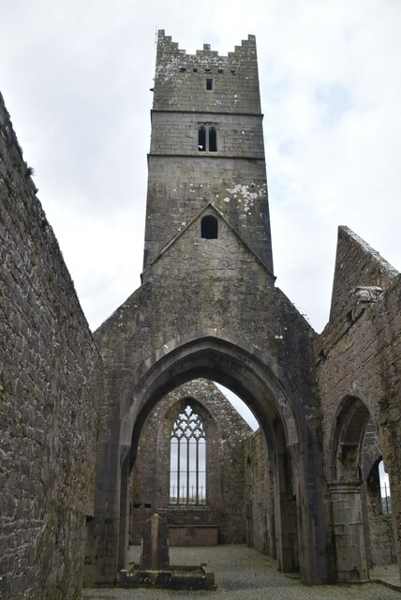
Choose Rathfran if you enjoy reading a religious building through its surviving details. Start with the church, then look for evidence of the adjoining community spaces where safely visible. The ruin’s interest lies in architecture and history; a folklore story is context for interpretation, not an invitation to dig, probe or move stones.
Know before you book: The founder’s exact identity is uncertain in the monument authority’s account. The loss of roofs and cloister buildings means the original complex must be interpreted from incomplete evidence.
The story behind the visit
The story behind the place
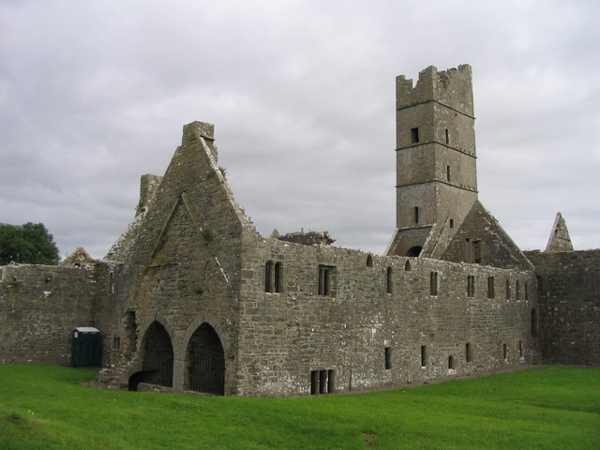
Rathfran was founded for Dominican friars in the thirteenth century and dedicated to the Holy Cross. The Office of Public Works records uncertainty over which local patron was responsible, a useful reminder that even an important foundation can have an incomplete documentary story. Its river setting mattered to communication and the movement of goods. The surviving church, sculpture and cloister traces provide a different kind of evidence, allowing the institution’s physical organisation to be considered without resolving every disputed name. Source ↗
Violence and destruction also form part of Rathfran’s history, including burning in the late sixteenth century. A later story describes treasure hidden near the abbey, but the authority explicitly treats the tale as uncertain. The distinction matters for visitors: folklore may explain part of a place’s reputation without establishing an archaeological fact. The strongest encounter remains with the actual ruin, its window forms and the relationship between church and former community spaces. Nothing in a treasure story authorises searching the ground, moving masonry or disturbing burials. Treat the legend as a separate layer of memory while leaving the monument intact. Source ↗