Skip to content
TheLazyNick

heritage · Mayo

Moyne Abbey

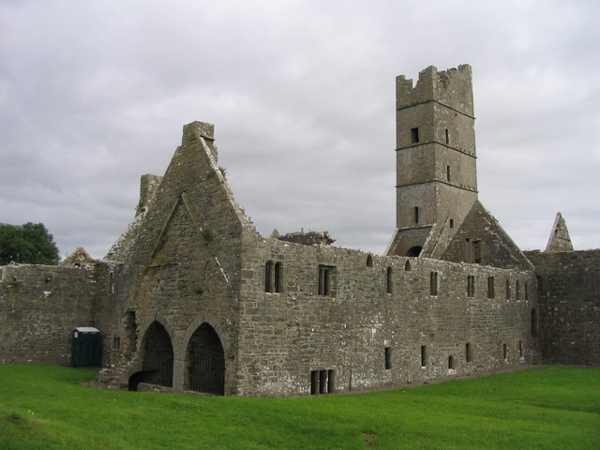
Livestock can be present on the approach to Moyne Friary, so follow current access instructions and keep clear of animals. The large roofless Franciscan complex near Killala preserves a church, tower and domestic spaces. Visit from permitted ground without assuming that every room or upper level is safe or open.

Add to planSaved trips & places

Saved on this browser. No account needed.

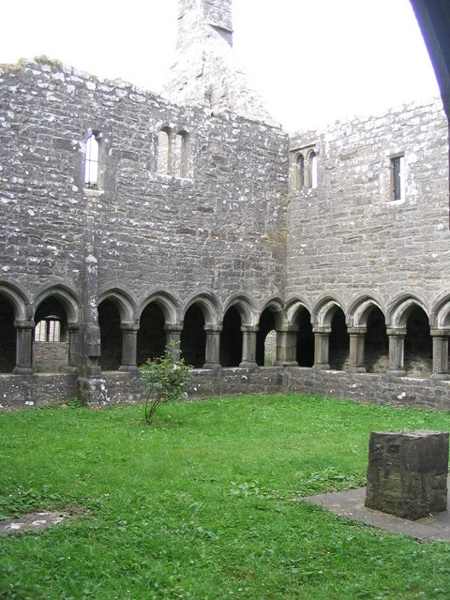
Moyne Friary ruins
Moyne Friary ruins. Resized for display. Photo: Francoise Poncelet ↗ · CC BY-SA 2.0

From research

Is this worth your time?

Choose Moyne if you enjoy reading a substantial religious complex through its surviving layout. The relationship between church, cloister and daily-living areas rewards more time than a quick tower photograph. Keep the visit quiet and flexible, respecting farmland, gates, burial places and current barriers rather than using surrounding fields to extend the route.

Know before you book: This is an unguided historic place with uneven ground and fragile fabric. Respect current barriers, burial areas and the permitted approach; do not climb.

Place highlights

What you will actually see

01

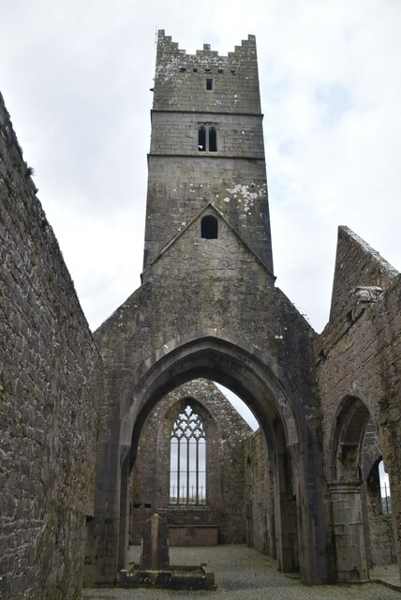
The church and tower

Look at the cruciform church and tower from the current visitor route. Their proportions give the complex its strong outline. Do not climb walls or stairs simply because they survive; access to higher fabric is not included in this visit.

02

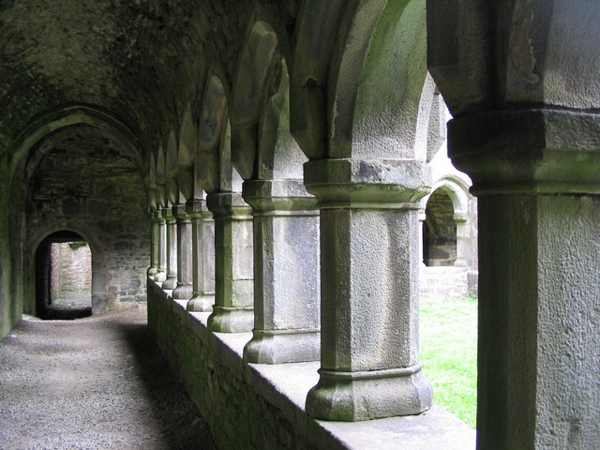
Cloister and rooms

Compare the spaces around the former cloister with the church. They recall communal work and daily routines as well as worship. Use interpretation where available and keep to permitted areas instead of entering every roofless opening.

03

The coastal landscape

Notice how the friary sits within the Killala Bay and Moy setting. The broader view gives context but does not establish a shore path across adjoining land. Keep farm boundaries and the agreed visitor approach respected throughout.

The story behind the visit

The story behind the place

OPW places the friary’s foundation in the mid-fifteenth century under MacWilliam Burke patronage, following permission to establish Observant Franciscan houses in the Killala diocese. That connection ties Moyne to the political and religious landscape of the region. The buildings should be understood as a community’s organised setting rather than a single picturesque ruin. Look at how the church relates to the cloister and other spaces before concentrating on isolated architectural details. Source ↗

The friary survived changes after the dissolution of monasteries but suffered repeated attacks, including burning by Sir Richard Bingham in 1590. OPW records further changes in ownership and a continuing presence of friars afterwards. That history makes a simple single-date account inadequate. The surviving fabric and associated buildings represent different phases of use, damage and adaptation. An unguided ground-level visit can convey that complexity, while care around livestock and private boundaries remains a separate present-day responsibility rather than something resolved by the monument’s historical importance. OPW also identifies associated buildings including a later house and a possible hospital, a reminder that religious places often continued to change after their original founding community had declined. Source ↗

Visitor information

Tickets, timing and access

Opening
Visit in daylight and follow current local access notices.Confirm with the operator ↗
Admission
No staffed admission product is advertised; check any current local arrangements.Confirm with the operator ↗
Booking
Independent viewing has no scheduled departure; arrange specialist guiding separately.Confirm with the operator ↗
Access
Livestock may be present. Use the current permitted approach and follow farm or monument instructions.Confirm with the operator ↗
Duration
Allow about 90 minutes for the monument and its immediate setting.Confirm with the operator ↗
Seasonal
Wet surfaces and short daylight can affect the visit; wear suitable shoes.Confirm with the operator ↗

Getting to the entrance

Follow the current signed Moyne Friary approach near Killala. Respect livestock, gates and any local restrictions along the permitted route. Official visitor information ↗

Your questions, answered

Confirm current access and visitor arrangements with the operator.

Is Moyne the same place as Rosserk?

No. They are separate friaries in the Moy area with different communities and histories. Source ↗

May I use any field route to reach it?

No. Follow the current permitted approach and respect farm instructions and livestock. Source ↗

Nearby options

Nearby places to explore

Explore other places in the area, then use live directions to plan your journey.

Rosserk Friary ruins
Rosserk Friary ruins. Resized for display. Photo: N Chadwick ↗ · CC BY-SA 2.0

heritage

Rosserk Abbey

Rosserk Abbey is a roofless riverside friary where uneven ground, old masonry and the water’s edge require care. Its compact church and domestic remains near the River Moy reward a quiet ground-level visit.…

Open place page →
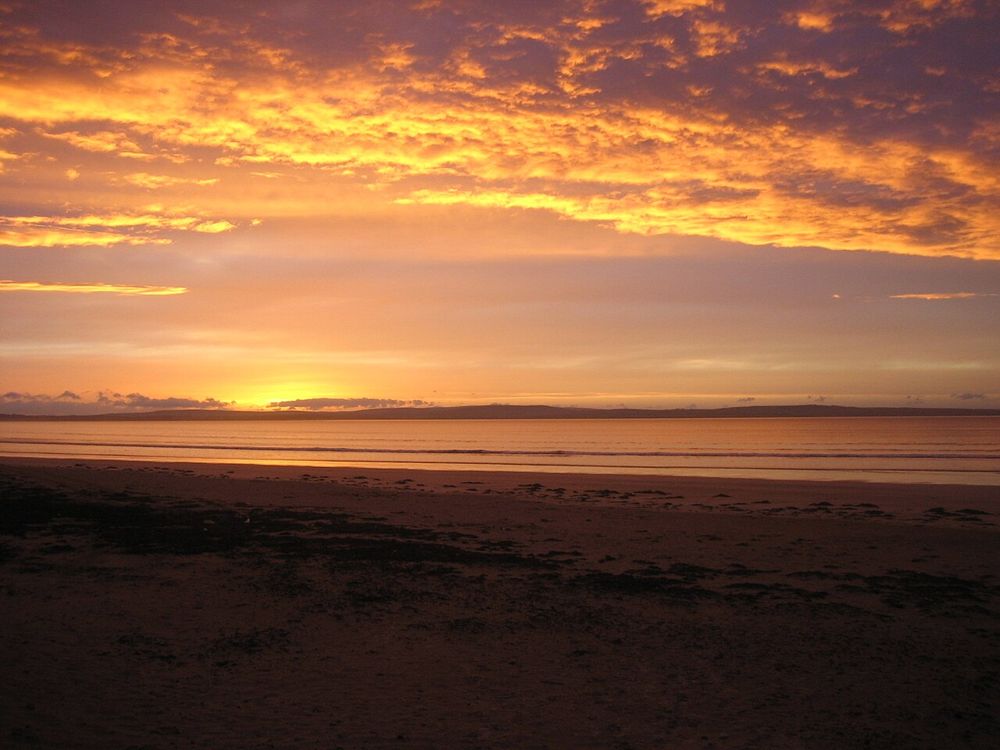
Sunset across the long sandy beach at Enniscrone
Sunset across the long sandy beach at Enniscrone. Source photograph; conditions and access may have changed. Photo: Robin Mais ↗ · CC BY-SA 2.0

coast

Enniscrone Beach

Enniscrone’s long sandy sweep makes a good antidote to a day of tightly timed attractions. The town sits beside the beach, so you can choose a short shore pause or a longer out-and-back without turning the…

Open place page →
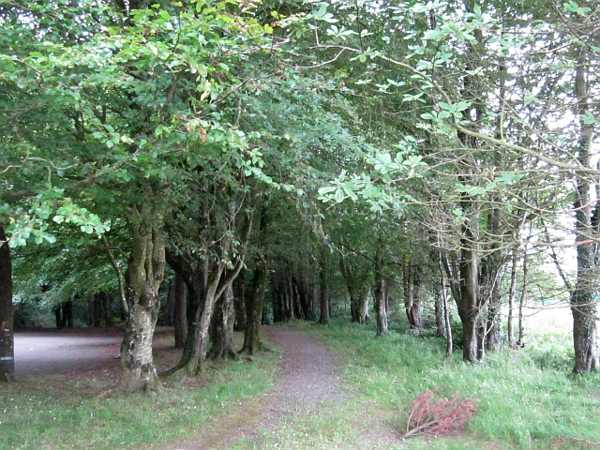
Woodland path at Belleek Woods in County Mayo
Woodland path at Belleek Woods in County Mayo. Resized for display. Photo: Richard Webb ↗ · CC BY-SA 2.0

nature

Belleek Woods

Belleek Woods offers riverside paths and woodland walking just north of Ballina in County Mayo. The River Moy gives the outing a clear edge and sense of direction, while paths lead back among the trees. This…

Open place page →
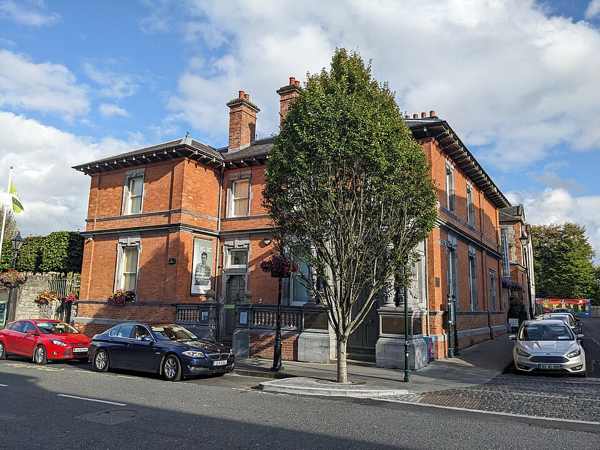
Former Provincial Bank building housing the Jackie Clarke Collection
Former Provincial Bank building housing the Jackie Clarke Collection. Resized for display. Photo: Newbert12 ↗ · CC BY-SA 4.0

attraction

The Jackie Clarke Collection

The Jackie Clarke Collection offers free museum admission Tuesday to Saturday, with Sunday and Monday closure. In central Ballina, its documents and objects connect a private collector’s lifelong interest with…

Open place page →
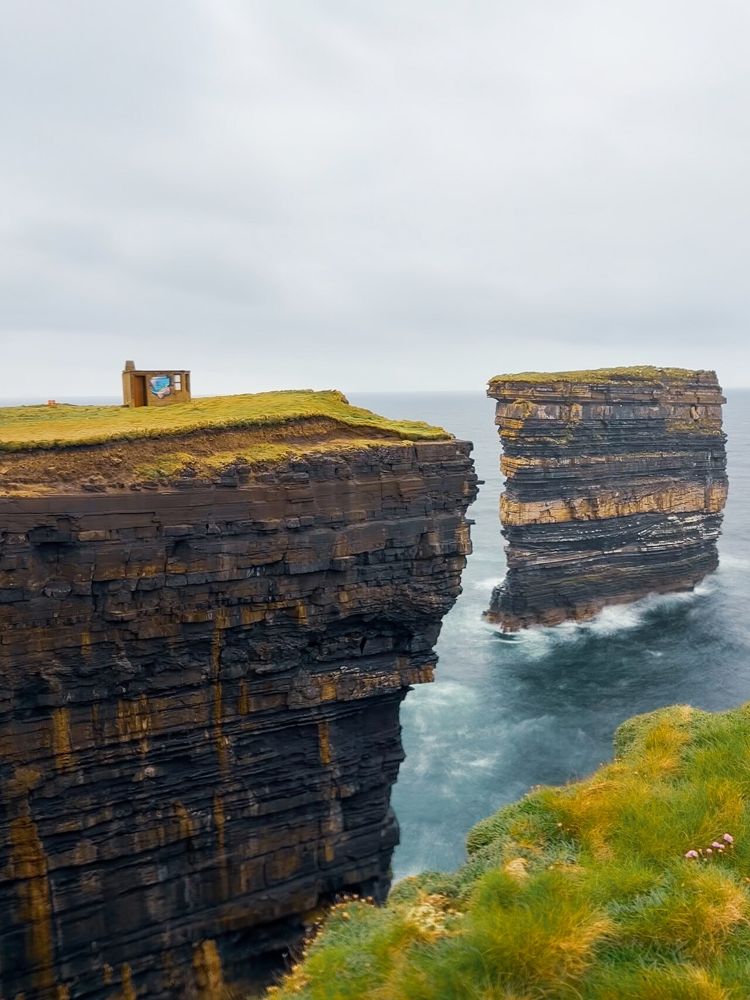
Layered cliffs and sea at Downpatrick Head
Layered cliffs and sea at Downpatrick Head. Source photograph; conditions and access may have changed. Photo: Michael Deligan ↗ · CC BY-SA 4.0

coast

Downpatrick Head

Downpatrick Head’s detached sea stack, Dún Briste, is the obvious draw, but the headland is more than a platform for one photograph. The open turf, layers of cliff and sound of water below make the coastline’s…

Open place page →
Céide Fields visitor centre in the north Mayo landscape
Céide Fields visitor centre in the north Mayo landscape. Source photograph; conditions and access may have changed. Photo: Matysik ↗ · CC BY-SA 3.0

heritage

Céide Fields

Céide Fields asks you to look for a landscape that is mostly hidden. Beneath the bog are traces of prehistoric fields and settlement, and the visitor interpretation does much of the work of making that…

Open place page →

External visitor reviews

Find the matching listing and reviews on Google Maps ↗

Part of a bigger journey

Location & access

Getting your bearings

This is an unguided historic place with uneven ground and fragile fabric. Respect current barriers, burial areas and the permitted approach; do not climb.

54.20225, -9.17702 · Reference point; confirm the correct entrance and access. Map © OpenStreetMap contributors.

Orientation only: a verified public entrance is not established by this pin. Use the operator arrival information before travel.

Sources & place context

Browse more Ireland places →