From research
Is this worth your time?
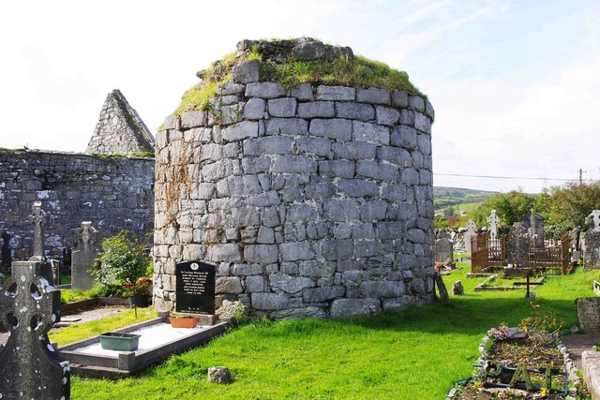
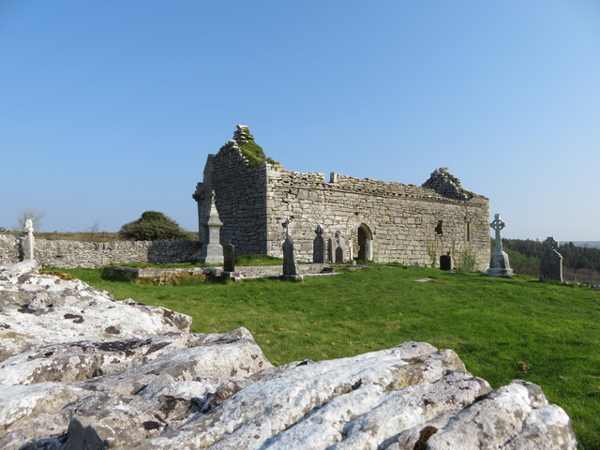
Choose Kilnaboy for a short stop focused on details rather than a large exhibition. The church doorway and gable invite close observation, while the tower adds a different building form to compare. Look at the relationship between them without assuming every surviving feature was made at the same time or served the same purpose.
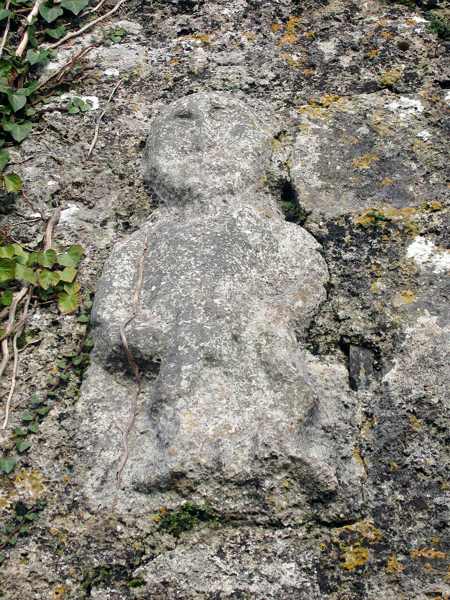
Know before you book: The monument is exposed to weather and includes uneven ground. A carving above a doorway is for viewing from below, not a reason to climb or touch the masonry.
The story behind the visit
The story behind the place
The church at Kilnaboy survives as a ruin with notable carved details and evidence of later repair. The national visitor description records work in the early eighteenth century, illustrating why the present fabric should not be assigned to one unchanging medieval moment. Buildings in religious places were maintained, altered and reused over long periods. The doorway and gable therefore deserve attention as specific surviving elements rather than merely decoration attached to a generic ruined church. Source ↗
The nearby round tower introduces a second architectural strand, associated with the longer development of an ecclesiastical site. Its relationship with the church is informative even without access inside either structure. The carved figure above the doorway also attracts attention, but its meaning should not be reduced to a confident modern label or a story unsupported by the site interpretation. A useful visit keeps three scales in balance: the whole religious setting, the contrasting forms of church and tower, and the small details of carving and repair. That approach gives the monument substance while leaving its fragile surfaces and active burial context undisturbed. Source ↗