From research
Is this worth your time?
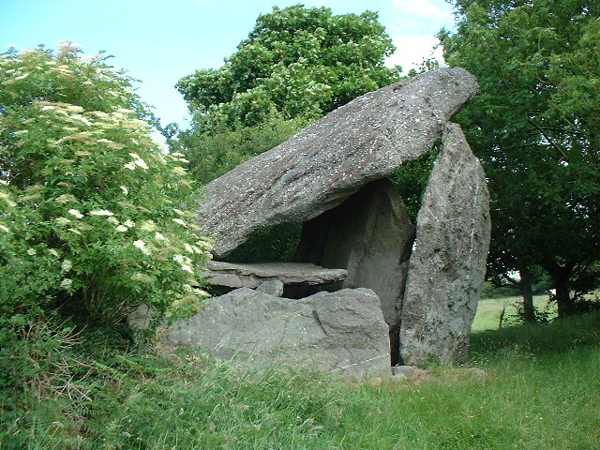
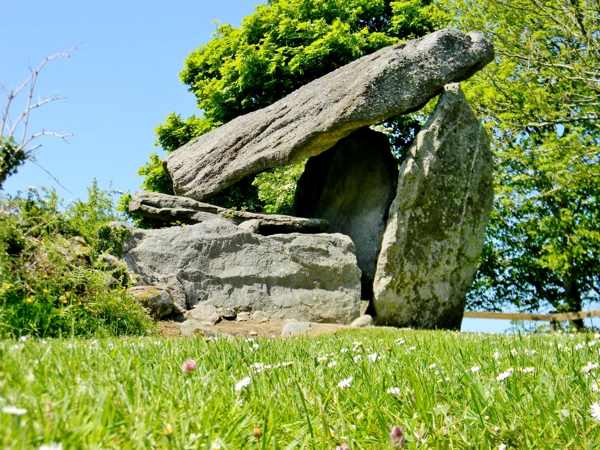
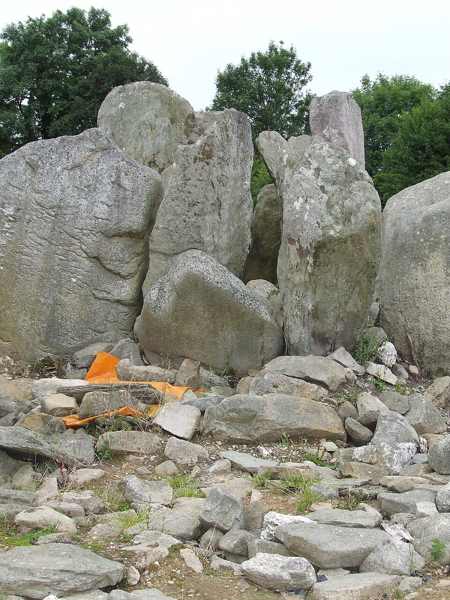
Choose Kilmogue if prehistoric construction and the visual relationship between stones interest you. Walk around only where the approach permits, comparing how the high entrance and lower rear change the silhouette. A quiet half-hour can be more revealing than a quick photograph, especially when the monument is considered as a burial structure rather than an isolated balancing act.
Know before you book: The tomb’s precise original appearance and use cannot be reconstructed from the standing stones alone. The mapped monument point does not authorise a shortcut across adjoining land.
The story behind the visit
The story behind the place
Kilmogue belongs to the portal-tomb tradition of the Neolithic period. Such monuments are named for the prominent upright stones at the entrance to their chambers, with a large capstone carried above other supporting stones. They form one category among Ireland’s megalithic burial monuments, distinct from passage tombs, court tombs and wedge tombs. The surviving form is exceptional in scale, but its archaeological significance also lies in how the stones work together to define a built place for the dead. Source ↗
The Office of Public Works describes a range of local names, including Leac an Scáil, and notes that the tomb changes appearance according to the viewing angle. Those names and visual impressions are part of its later cultural history, separate from evidence about Neolithic builders. The standing stones also represent only what survives: an associated cairn may once have changed how much of the structure was exposed. Looking closely at the capstones and entrance therefore offers a starting point, not a complete reconstruction of an ancient ceremony. Keep interpretation proportionate to the evidence and let the monument’s actual form remain the centre of the visit. Source ↗