From research
Is this worth your time?
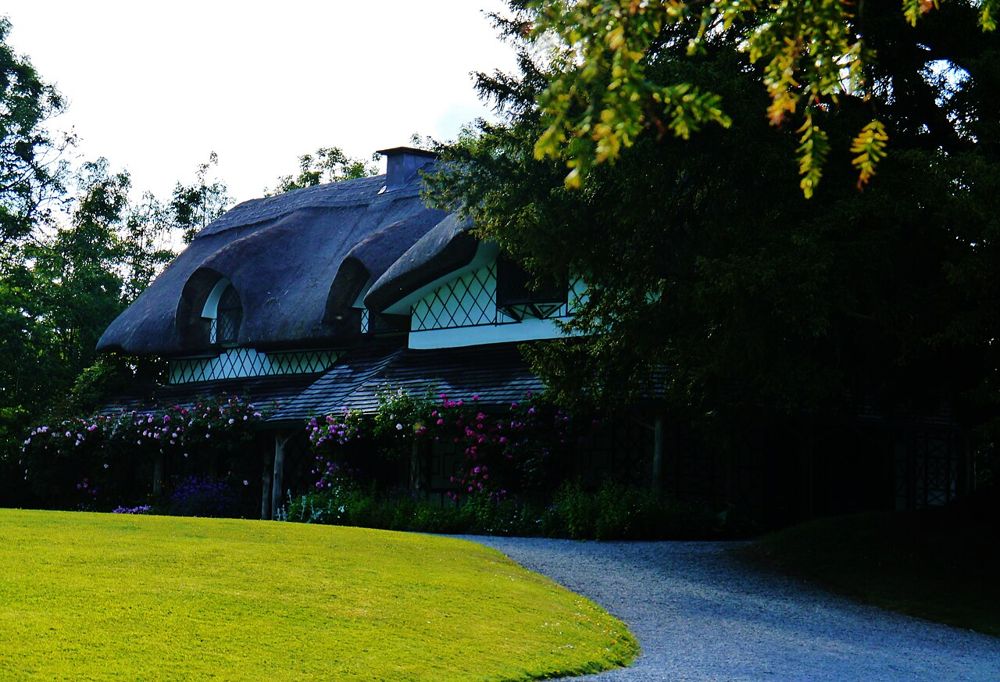
Choose Dromana for a short, attentive look at an unusual piece of nineteenth-century design. The details reward slower observation more than a hurried photograph from the road. If there is no safe place to stop or stand, continue rather than obstructing traffic or trying to fit the entire building into a picture.
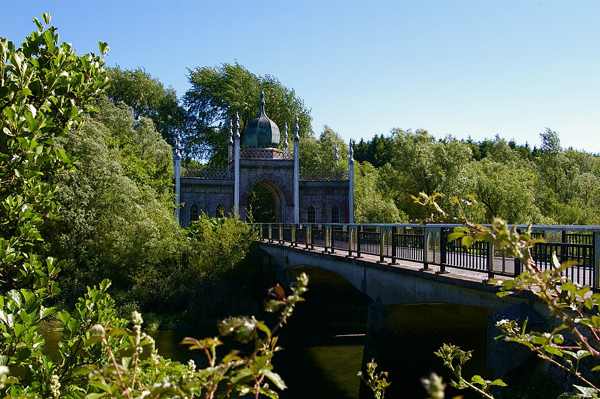
Know before you book: A working road and river crossing frame the gate. Do not stand in the carriageway or assume access to the lodges or estate.
The story behind the visit
The story behind the place
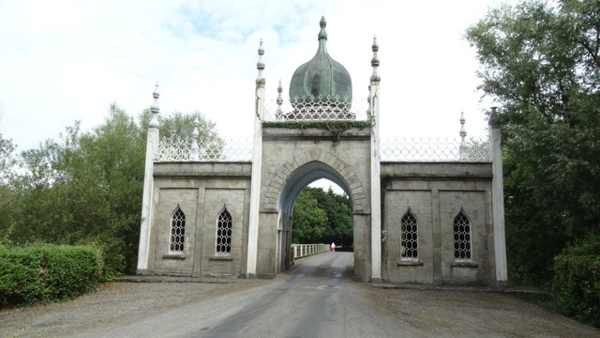
Dromana is often described through the story of a temporary honeymoon welcome for Henry Villiers-Stuart and his wife. The National Inventory treats that story cautiously rather than presenting every detail as proven. Surviving drawings dated 1849 provide firmer evidence for Martin Day’s work on the permanent gate. That distinction matters: an attractive tradition can introduce a place, while drawings and the surviving building offer a more secure way to understand its development. Source ↗
The mixed architectural language is itself part of the story. The gate uses forms associated with Gothic design alongside motifs connected with fashionable nineteenth-century interest in distant architectural traditions. Rather than reading it as an authentic building transported from another country, look at how those references were assembled for an Irish estate entrance. Later restorations helped preserve a small structure whose visual ambition is much larger than its practical accommodation. The best visit stays with the exterior and its setting; the wider estate should be approached through its own current visitor information. Source ↗