Skip to content
TheLazyNick

heritage · Armagh

Ballymacdermot Court Tomb

Ballymacdermot Court Tomb is a free outdoor monument on uneven hillside ground, with no climbing on its surviving chambers. The Neolithic burial place occupies the southern slopes of Ballymacdermot Mountain near Newry. Its stone arrangement and wider Ring of Gullion setting make a compact archaeological visit, with distant views dependent on the weather.

Add to planSaved trips & places

Saved on this browser. No account needed.

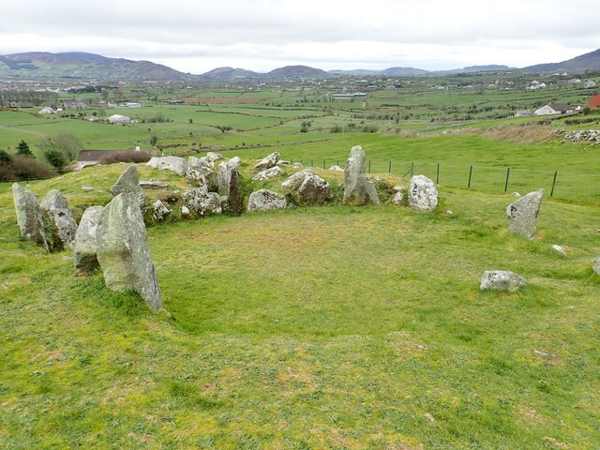
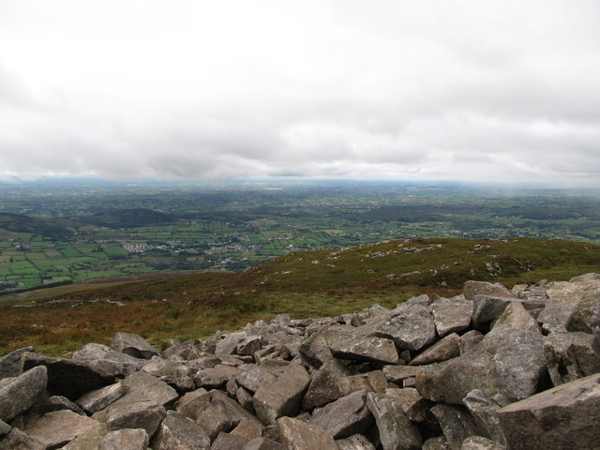
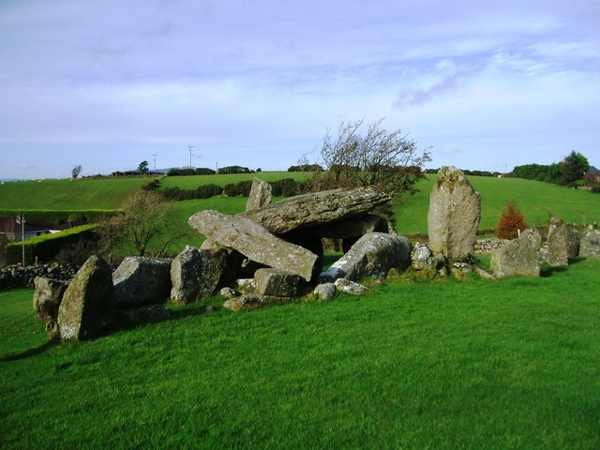
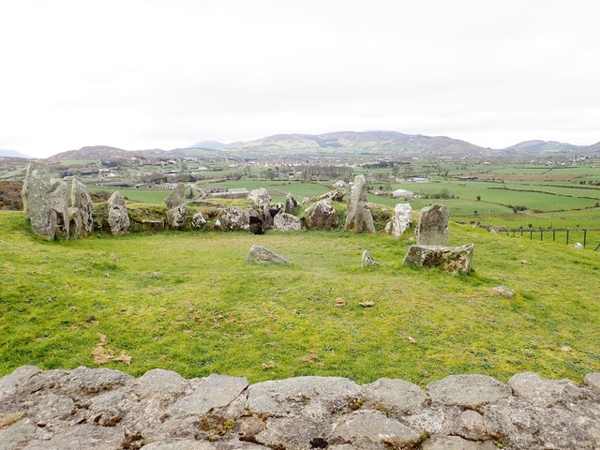
Ballymacdermot Court Tomb on the hillside
Ballymacdermot Court Tomb on the hillside. Resized for display. Photo: Eric Jones ↗ · CC BY-SA 2.0

From research

Is this worth your time?

Choose Ballymacdermot for a clearly surviving chambered tomb rather than a staffed exhibition or an extensive walking trail. Start by looking at the plan from the permitted ground around it, then notice how the monument sits within the surrounding hills. A short visit can be complete without climbing the stones or continuing across neighbouring land.

Know before you book: Observe the chamber stones from ground level; the hillside is uneven and distant views are weather-dependent.

Place highlights

What you will actually see

01

Three chambers

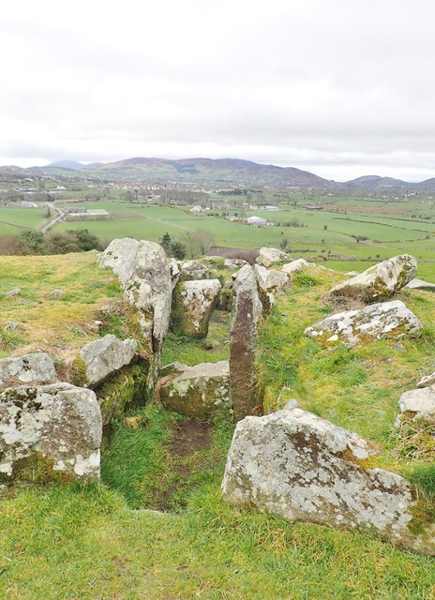
The monument preserves three chambers, giving a tangible sense of its internal arrangement. Follow their sequence visually rather than treating the stones as steps. The surviving divisions are the main feature, and they can be appreciated without touching or entering awkward gaps.

02

Court-tomb form

Look at how the approach and chamber arrangement work together. The monument is a burial structure, not a ring of unrelated boulders. A slow circuit on permitted ground can make its organisation clearer than a photograph taken from a single angle.

03

Ring of Gullion landscape

The hillside setting places the tomb within a larger terrain of mountains and lower hills. Clear conditions can add views towards the Mournes, Cooley and Slieve Gullion. Those views are a bonus rather than a reason to leave the authorised site or search for an informal higher route.

The story behind the visit

The story behind the place

The Department for Communities dates Ballymacdermot to the Neolithic period, broadly between 4000 and 2500 BC, and identifies it as a notably well-preserved three-chamber burial monument. That long date range should not be mistaken for a precise construction year. The useful point for a visitor is the surviving arrangement: the chambers allow an unusually direct look at the organisation of a prehistoric tomb without requiring a modern reconstruction. Source ↗

The monument’s position on the southern mountain slopes adds another way to understand it. Look at the relationship between the small stone structure and the broader Ring of Gullion landscape, rather than concentrating only on a close-up of one slab. Weather may hide distant ranges, but the local setting remains part of the visit. Keep interpretation modest where evidence is limited: a striking location does not prove a particular ceremony, alignment or ancient view. The remains themselves provide enough to examine. Stay on permitted ground, avoid disturbing stones or vegetation and give the chambers room to be seen without turning the monument into a climbing feature. Source ↗

Visitor information

Tickets, timing and access

Opening
DfC lists free public access, subject to temporary works restrictions.Confirm with the operator ↗
Admission
Ordinary entry is free.Confirm with the operator ↗
Booking
No ordinary outdoor booking is listed; check any current restrictions.Confirm with the operator ↗
Access
Uneven hillside ground; no climbing on or disturbing the tomb.Confirm with the operator ↗
Duration
Allow 20–30 minutes for the monument and setting.Confirm with the operator ↗
Seasonal
Wet ground and poor visibility can reduce comfort and distant views.Confirm with the operator ↗

Getting to the entrance

Approach Ballymacdermot Cairn using the authorised signed access near Newry; do not substitute an informal route across adjoining land. Official visitor information ↗

Your questions, answered

Confirm current access and visitor arrangements with the operator.

Is there a roofed museum here?

No. This is an outdoor archaeological monument. Source ↗

Are the distant mountains always visible?

No. Visibility depends on weather; the tomb remains the main subject. Source ↗

Nearby options

Nearby places to explore

Explore other places in the area, then use live directions to plan your journey.

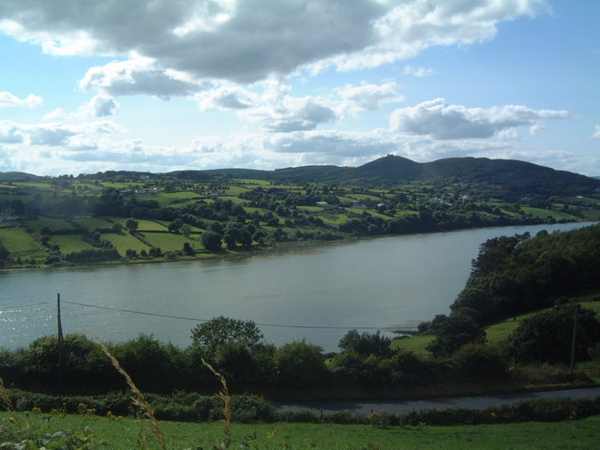
Camlough Lake and surrounding hills
Camlough Lake and surrounding hills. Resized for display. Photo: Harry McLoughlin ↗ · CC BY-SA 2.0

nature

Camlough Lake

Camlough Lake’s proposed recreational hub is not confirmed open; plan around existing public access and do not assume new showers, changing rooms or pontoons are available. The lake near Camlough is an…

Open place page →
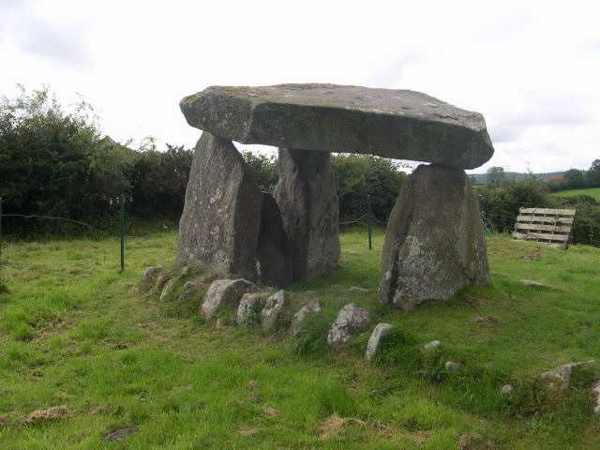
Capstone and portal stones at Ballykeel Dolmen
Capstone and portal stones at Ballykeel Dolmen. Resized for display. Photo: Ron Murray ↗ · CC BY-SA 2.0

heritage

Ballykeel Portal Tomb (Dolmen)

Ballykeel Dolmen and Cairn is a Neolithic burial monument near Mullaghbawn, known locally as the Hag’s Chair. A large capstone rests above an octagonal chamber at the southern end of a much reduced cairn. The…

Open place page →

External visitor reviews

Find the matching listing and reviews on Google Maps ↗

Part of a bigger journey

Location & access

Getting your bearings

Observe the chamber stones from ground level; the hillside is uneven and distant views are weather-dependent.

54.15436, -6.36970 · Reference point; confirm the correct entrance and access. Map © OpenStreetMap contributors.

Orientation only: a verified public entrance is not established by this pin. Use the operator arrival information before travel.

Sources & place context

Browse more Ireland places →