From research
Is this worth your time?
Choose it when you want a clear introduction to revolutionary history in West Cork, with room to follow your own interests. Begin with the broad chronology, then spend longer with one document, object or audiovisual account. Allow at least an hour, and bring questions to the staff rather than expecting the house alone to explain the political story.
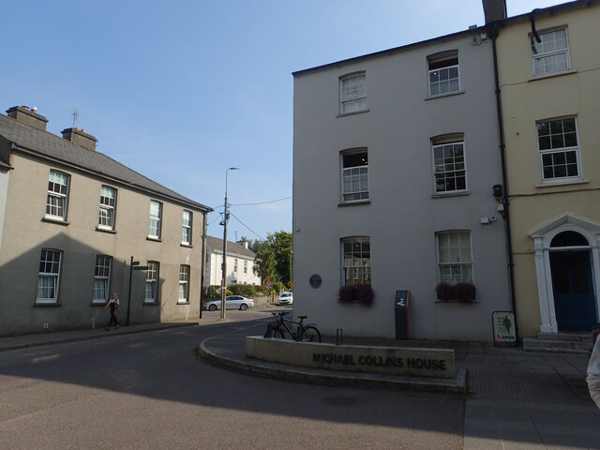
Know before you book: The building is an adapted museum. Collins lived on Emmet Square between 1903 and 1905, but the exact house has not been established by the museum’s research.
The story behind the visit
The story behind the place
The museum was conceived by Clonakilty Town Council in 2012 and developed in a restored building at No. 7 Emmet Square. Its interpretation places Michael Collins within a longer local and national history, including figures such as Tadhg an Asna, associated with the rebellion of 1798, and Jeremiah O’Donovan Rossa. Those earlier stories help explain the political traditions surrounding Collins, instead of presenting his career as something that appeared without a local background. Source ↗
The house name requires a careful distinction. The museum explicitly rejects the former identification of No. 7 as the building where Collins lived, while confirming his connection with Emmet Square during his youth. That correction is part of the value of a researched museum: an attractive local story can be revised when the evidence does not support it. Read the building and displays together, but keep a museum’s present location separate from the places where historical events actually occurred. The result is a more useful introduction to Clonakilty’s history than a simple claim to be standing in Collins’s own home. Source ↗