From research
Is this worth your time?
Choose Kilclooney if you enjoy close observation of prehistoric stonework rather than a large visitor-centre experience. Allow time for the approach and for looking at both tombs. Follow the current permitted lane, close gates and respect farming activity; a monument’s presence in a field does not make every direction a public path.
Know before you book: An unguided outdoor monument has uneven ground and fragile fabric. Stay on permitted approaches, keep off masonry and respect local restrictions.
The story behind the visit
The story behind the place
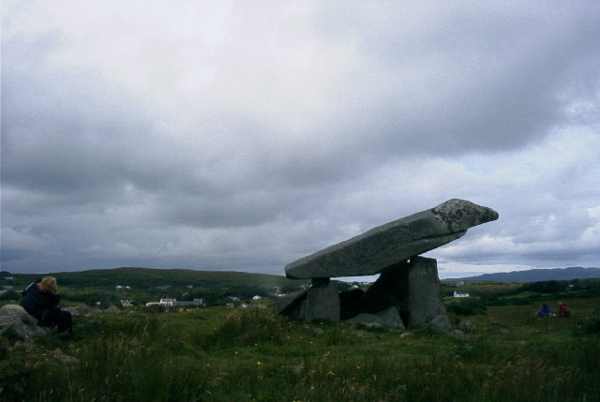
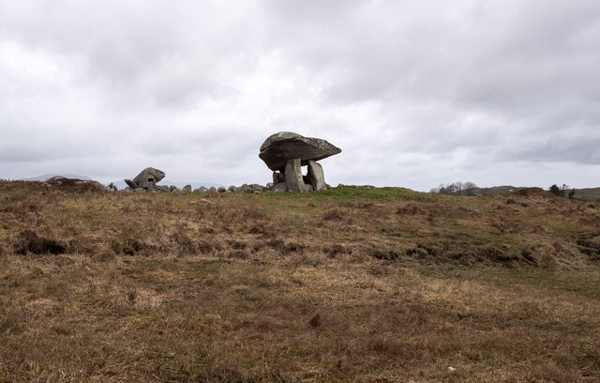
The local Ardara visitor account places the tombs in the Neolithic period, roughly the fourth to third millennia BC. The larger monument has paired portal stones and a substantial capstone, while a smaller supporting stone helps set the angle at its lower end. These visible construction choices give the visit its focus. Look carefully at how the stones relate to one another without assuming that a modern analogy to a bird or aircraft explains the builders’ original intentions. Source ↗
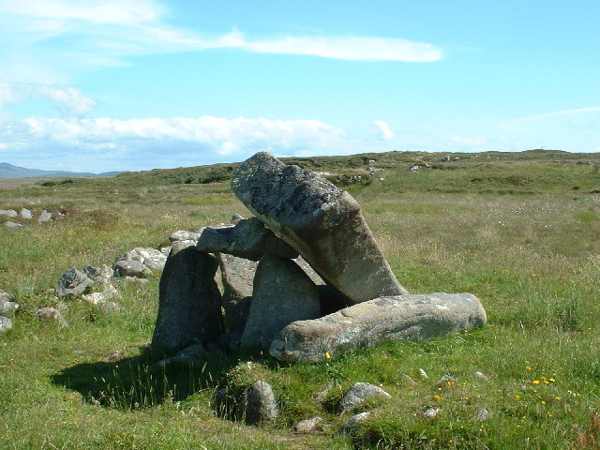
Fáilte Ireland records fragments of undecorated Neolithic pottery as the only known finds and describes traces of a cairn associated with the two tombs. The smaller structure is partly collapsed, making comparison especially useful. What survives is therefore a partial view of a prehistoric burial setting rather than a complete original appearance. The stones deserve care precisely because they carry that evidence. Staying on the agreed approach and leaving the monuments untouched allows observation without adding damage to the surviving fabric. Source ↗