Church and belfry
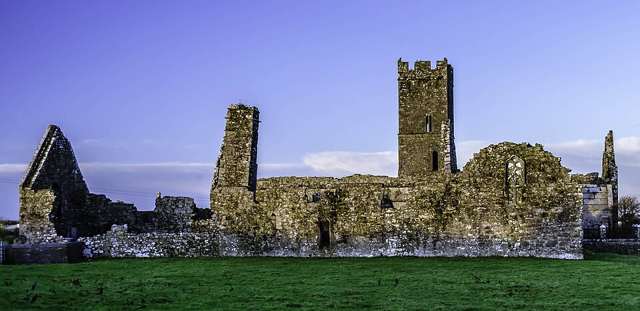
Look at how the tower separates the nave and chancel. Its position explains more about the church than a distant view alone, while the missing internal stair rules out treating it as a visitor climb.

heritage · Clare
Clare Abbey is a ruined Augustinian monastery beside the River Fergus near Ennis. Its church, square belfry and domestic ranges form a substantial complex, with late-medieval window detail worth a close look. It is separate from Ennis Friary and offers an unguided outdoor visit where architecture and the plan of the religious community are the main interests.
From research
Choose it for a quieter medieval-heritage stop outside the town centre. Begin with the church and tower, then look at how the domestic buildings surround the cloister area. Keep the burial-ground setting respectful and plan ground-level observation, leaving closed or inaccessible parts of the ruin alone.
Know before you book: Unguided National Monument with uneven ground and later burials. The belfry lacks its internal staircase; plan a ground-level visit.
Place highlights
Look at how the tower separates the nave and chancel. Its position explains more about the church than a distant view alone, while the missing internal stair rules out treating it as a visitor climb.
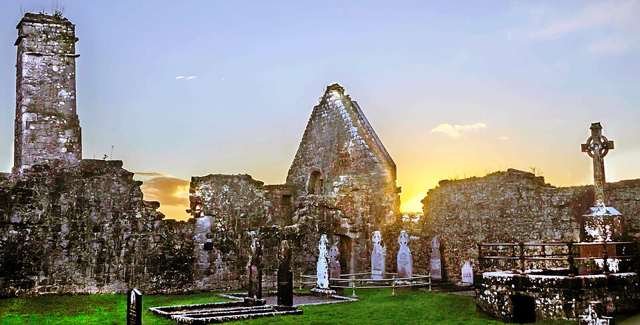
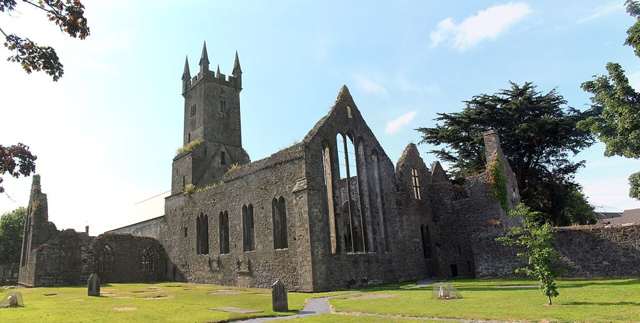
Spend time examining the surviving late-medieval window details from safe ground. Their carefully worked stone contrasts with the rougher surviving walls and can be appreciated without touching the fabric.
Follow the permitted ground-level route around the domestic remains. The layout around a cloister helps explain that a monastery involved daily living and work as well as the church itself.
The story behind the visit
The Augustinian house was founded in the late twelfth century and became a major religious establishment in County Clare. Its remains include the church, belfry and domestic buildings around a cloister. OPW draws attention to later window tracery and the absence of evidence for a western range. These details make the ground plan worth reading instead of treating the site simply as a picturesque church shell. Source ↗
Later family burials and conservation work form part of the visible site. The monastery’s history and the present burial-ground setting should therefore be considered together. Its location near Ennis can make it easy to confuse with the town’s Franciscan friary, but they are separate places with different religious histories and visitor experiences. A patient circuit focuses on the church layout, worked stone and surviving ranges while leaving fragile masonry and inaccessible levels outside the route. The contrast between church and domestic ranges makes the monastery legible as a community with practical routines as well as a place of worship. Source ↗
Visitor information
Follow the signed approach near Clareabbey Roundabout outside Ennis and keep the narrow access road clear. Do not follow town-centre Ennis Friary directions for this separate abbey. Official visitor information ↗
Confirm current access and visitor arrangements with the operator.
No. Clare Abbey is the separate Augustinian monastery near the River Fergus. Source ↗
Plan a ground-level visit. OPW notes that the belfry’s internal staircase is missing. Source ↗
Nearby options
Explore other places in the area, then use live directions to plan your journey.
heritage
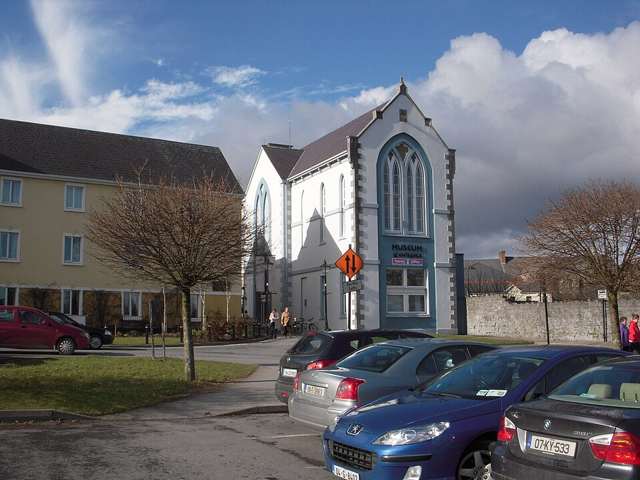
Clare Museum in Ennis introduces the county through original objects and the stories attached to them. Its collection ranges across archaeology, political history and everyday life, making it a useful indoor…
Open place page →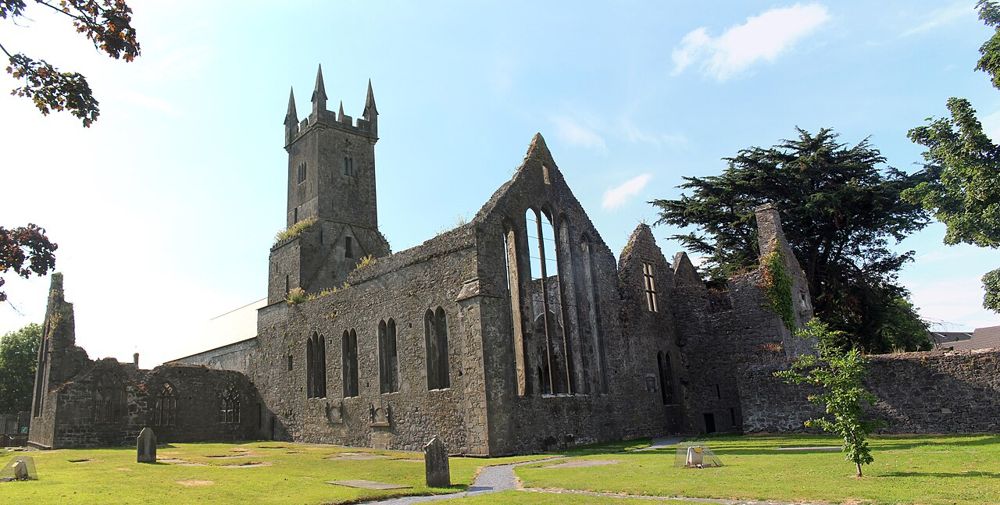
heritage
Ennis Friary is a good reminder that the most interesting part of a ruin can be small. Its limestone carvings, tombs and windows reward looking closely rather than chasing a grand view. Because it sits in…
Open place page →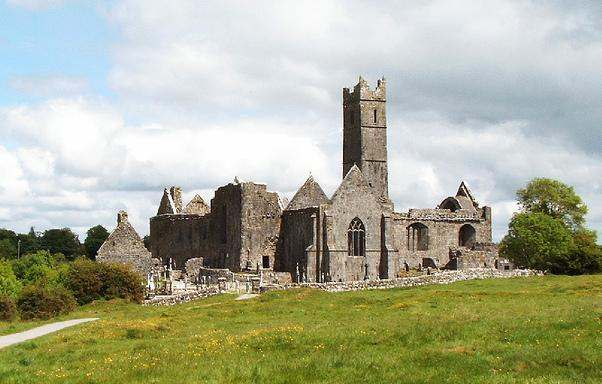
heritage
Franciscan ruins in Quin village where a medieval monastery incorporated the remains of an earlier Anglo-Norman castle. The cloister makes the changing uses of the site especially easy to read.
Open place page →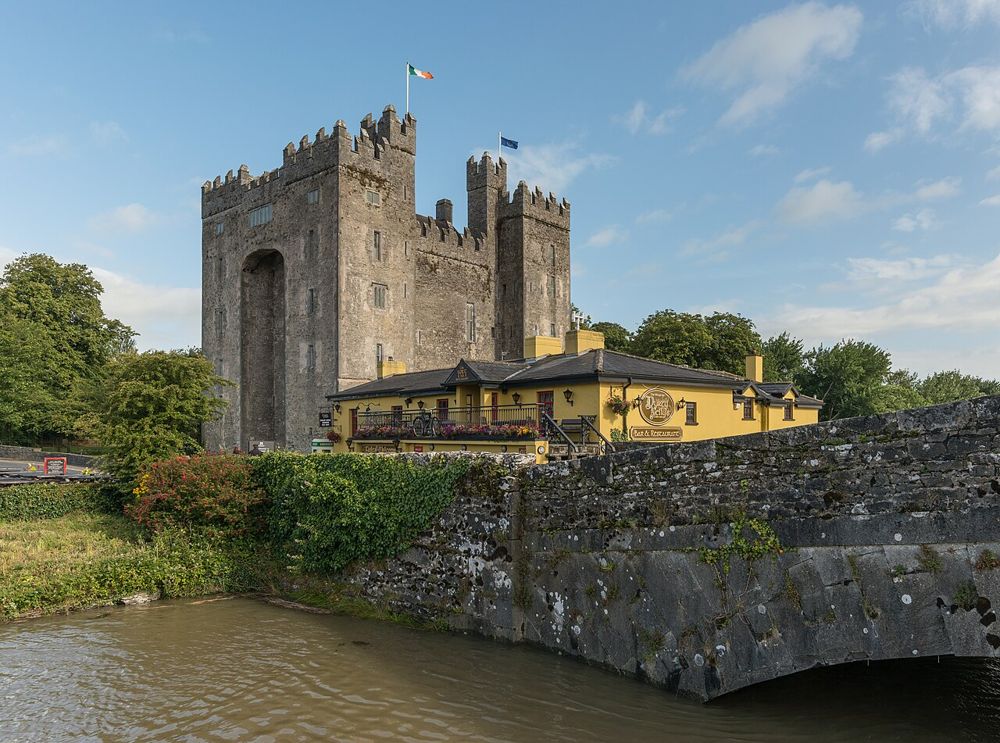
heritage
Bunratty is worth planning as a castle and village visit, rather than a quick photograph from the road. Inside the stone tower, furnished halls make the scale of an elite medieval household tangible. Outside,…
Open place page →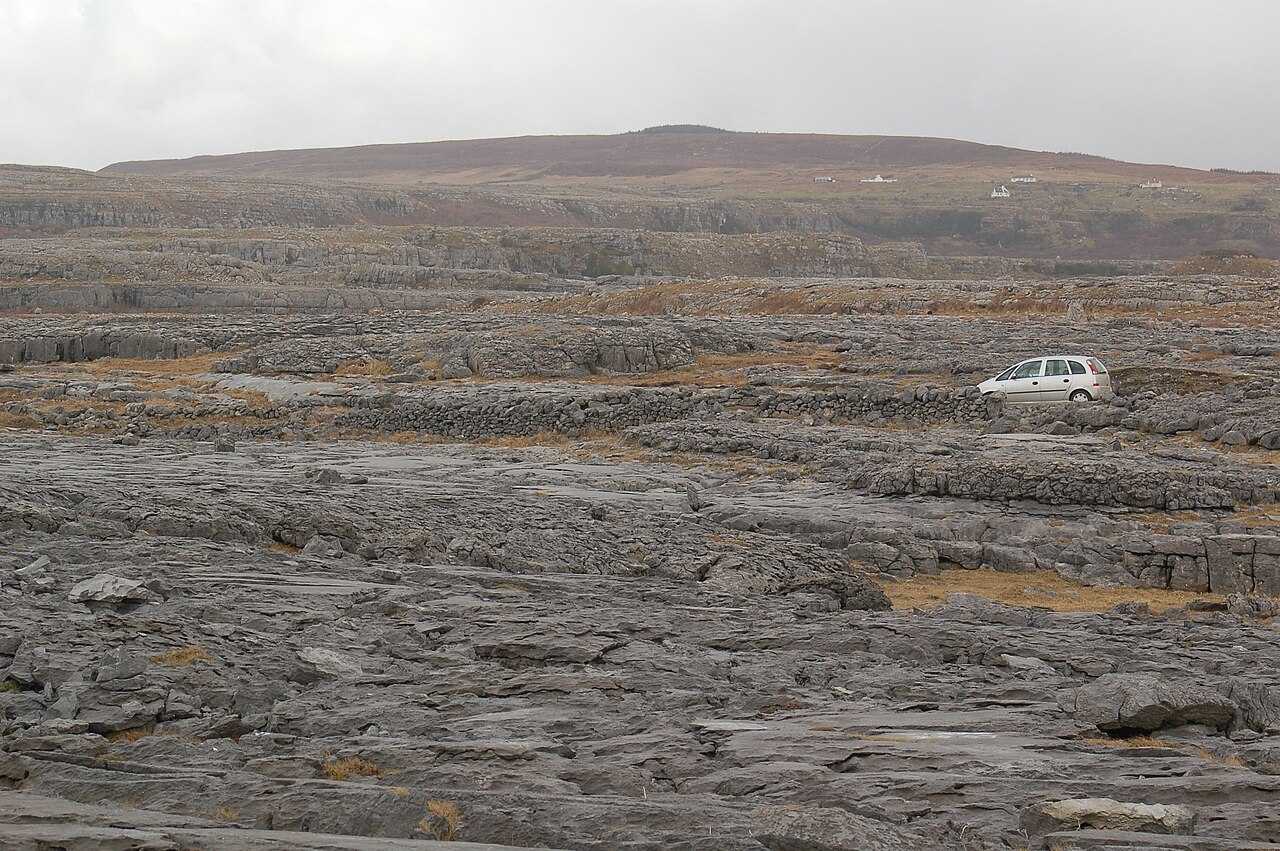
nature
The Burren is a limestone landscape to explore through a specific trail or geosite, not a single viewpoint that covers the whole region.
Open place page →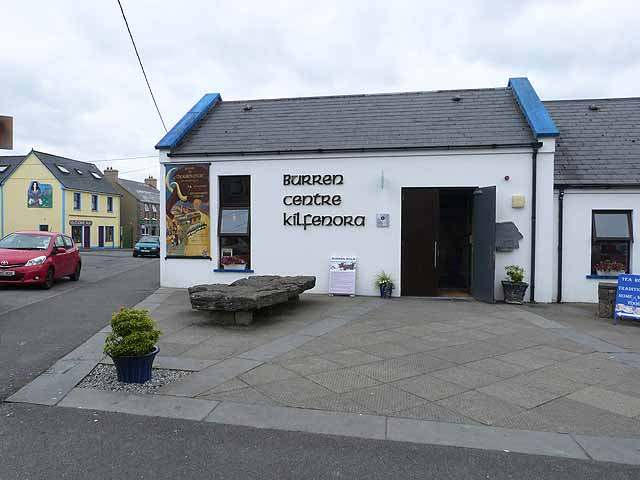
heritage
A community-run introduction to the Burren in Kilfenora, with exhibitions about the region and its people, plus a display on the Kilfenora Céilí Band. It offers useful context before exploring the wider…
Open place page →Location & access
Unguided National Monument with uneven ground and later burials. The belfry lacks its internal staircase; plan a ground-level visit.
52.82902, -8.96896 · Reference point; confirm the correct entrance and access. Map © OpenStreetMap contributors.
Orientation only: a verified public entrance is not established by this pin. Use the operator arrival information before travel.