From research
Is this worth your time?
Choose it if you enjoy early medieval sculpture and want several related monuments in one small setting. The interest comes from the relationship between tower, crosses and later church, rather than a climb or a visitor-centre display. Allow quiet time among the stones and respect the continuing burial and religious use.
Know before you book: OPW permits external viewing of the round tower only. Do not enter it, climb monuments or assume the church interior is open; graves and services deserve priority over sightseeing.
The story behind the visit
The story behind the place
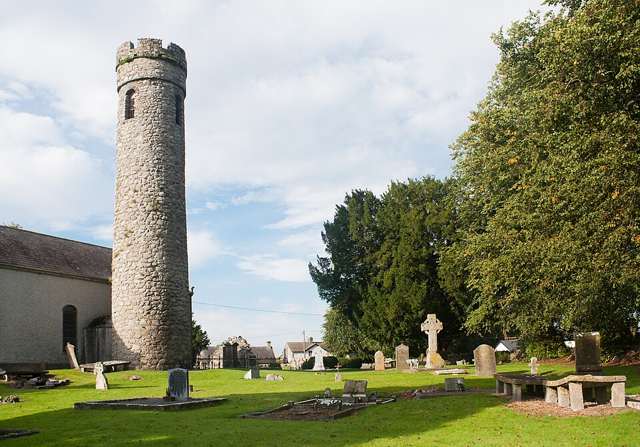
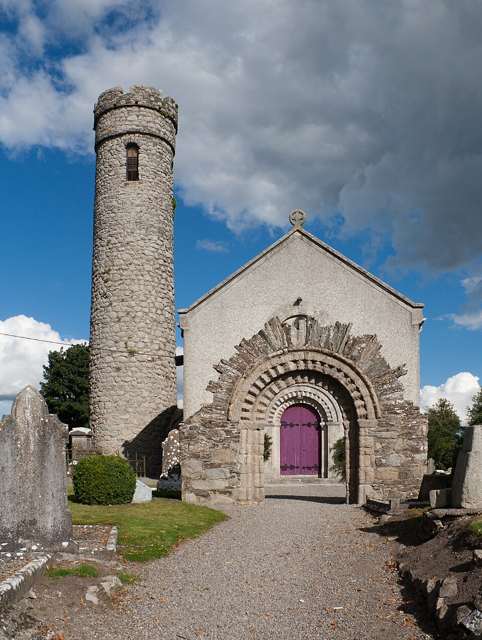
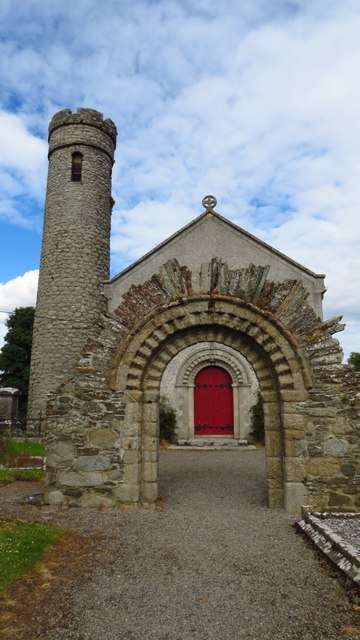
Castledermot developed from a monastic settlement associated with St Diarmuid. Its surviving tower, crosses and other carved stones belong to different phases of that religious landscape. The present church incorporates earlier architectural material, so the site is best understood through continuity and alteration rather than as a single preserved moment from the early Middle Ages. Source ↗
The round tower has been substantially altered, including changes to openings, internal arrangements and the top. These modifications are part of its history and should not be mistaken for an entirely original form. At ground level, the high crosses and other monuments offer a different kind of evidence through carving and commemoration. Seeing them together in the active churchyard connects architecture, religious expression and remembrance while leaving the closed tower interior outside the visit. That layered setting is the central attraction: different objects and buildings preserve different periods without requiring a reconstructed monastery or access to the tower. Source ↗