From research
Is this worth your time?
Choose Tullylease if early Christian carving and the layered history of a small church site interest you. Look at the slabs and the surviving building together, distinguishing an inscribed memorial from the walls that now surround it. A careful visit can reveal artistic connections without touching the stone or trying to make a worn line clearer.
Know before you book: The slabs have received conservation treatment. Leave every carved surface and loose fragment undisturbed, and follow the actual site route rather than searching for access behind mounted stones.
The story behind the visit
The story behind the place
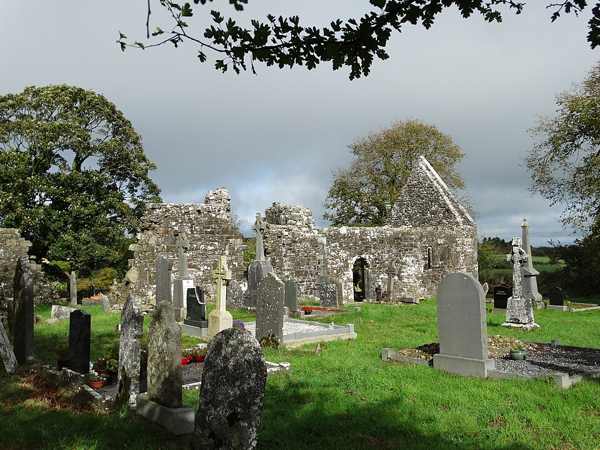
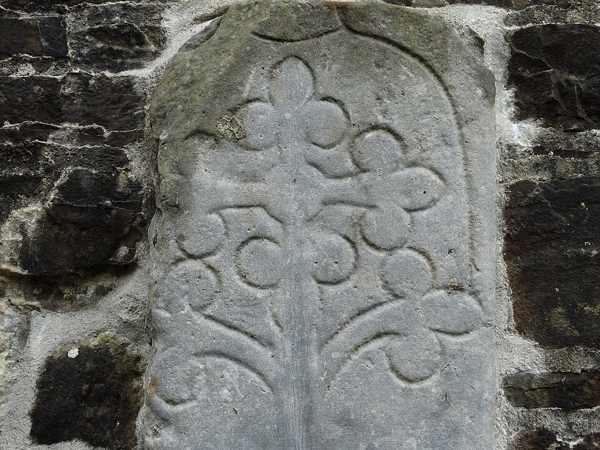
Tradition and the annals connect Tullylease with the monk Berechert, while the place name is interpreted as referring to an enclosed religious site. The standing church contains fabric from several medieval phases, and the carved slabs preserve an earlier artistic strand. The Office of Public Works identifies similarities between the best-known incised cross and the art associated with Lindisfarne. Such comparisons connect a local monument with wider artistic networks, while leaving the actual stone and inscription as the central evidence visitors can observe. Source ↗
The site later came under Augustinian control and continued to change, so its present ruins should not be read as a single unaltered foundation. The slabs themselves now face a more immediate conservation issue: a modern practice of scratching crosses into them has damaged the original surfaces. The authority explicitly asks visitors not to continue it. That warning is integral to the visit, not an optional etiquette point. Careful looking preserves both legible carving and information too faint to notice casually, allowing the site’s historical and artistic connections to remain available for future study and appreciation. Source ↗