From research
Is this worth your time?
Choose it if you enjoy exploring how medieval buildings fitted together and want more than a quick church exterior. It is an unguided site, so a little preparation helps. The narrow road, cattle-grid entrance and uneven historic spaces also make a flexible arrival and sensible footwear worthwhile.
Know before you book: Access is through a gate over a cattle grid, with a narrow approach road. Follow local restrictions around the ruin and remember that historic burial areas remain part of the site.
The story behind the visit
The story behind the place
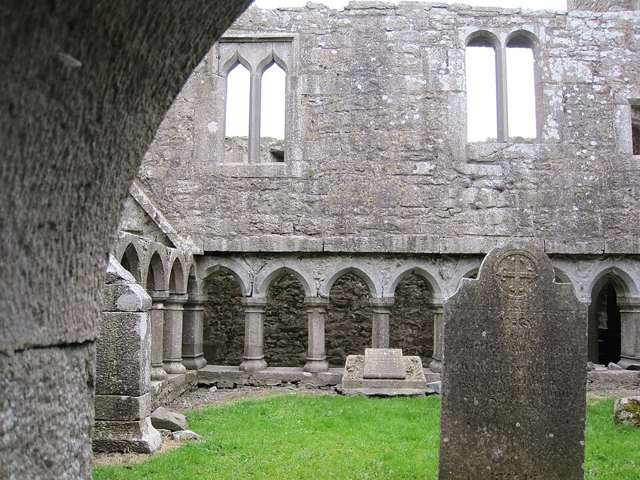
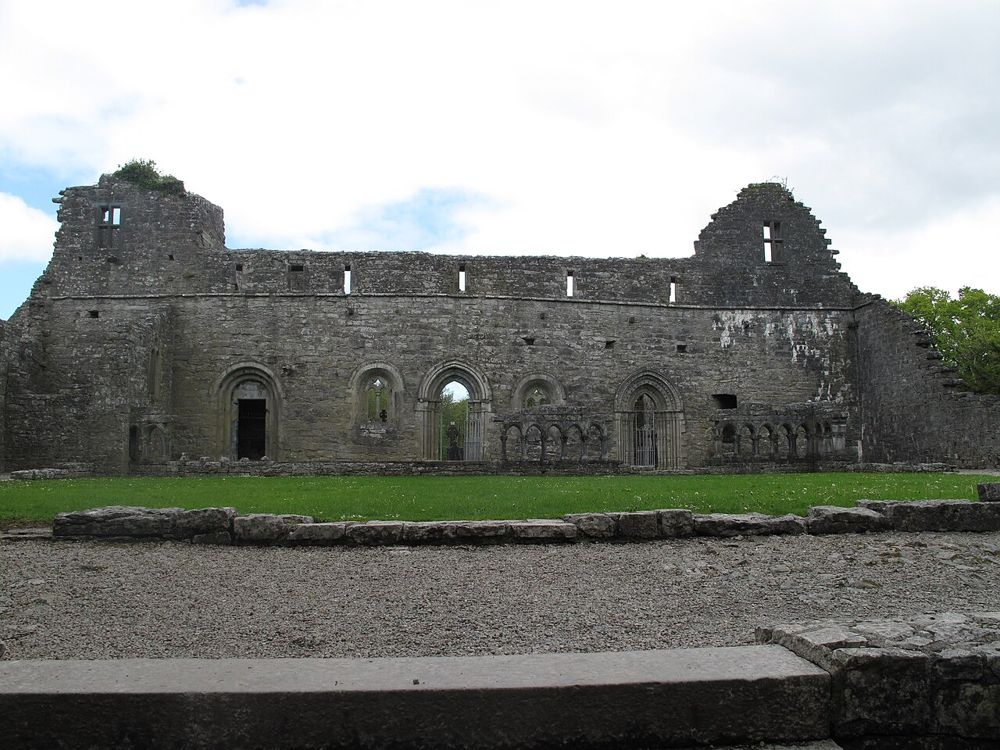
The origins of Ross Errilly are debated in published histories, but much of the surviving fabric belongs to the later medieval period. OPW describes a substantial Franciscan complex developed around cloisters, with church and domestic quarters serving different needs. Rather than fixing the whole visit to a disputed foundation date, concentrate on the evidence of a community whose buildings changed over time. Source ↗
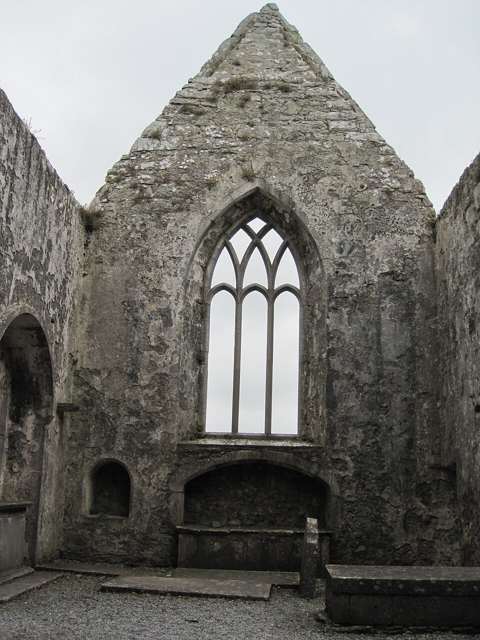
Food preparation and communal living are unusually legible here. The kitchen’s oven and fish tank connect the friary with ordinary bodily needs, while the church and tower express its religious purpose. This combination makes Ross Errilly especially useful for understanding a monastery as a working household. The later history of suppression, return and eventual abandonment adds further layers, so the present ruin should not be read as the remains of one single moment. Its richness lies in that combination of religious ambition and the ordinary practical routines required to sustain a community. Source ↗