Skip to content
TheLazyNick

heritage · Laois

Killeshin Romanesque Doorway

Killeshin’s Romanesque doorway is fragile carved stonework within an unguided church ruin, so look without touching or climbing. The site in County Laois rewards a close ground-level visit focused on the surviving entrance and the wider church. Keep the burial-ground setting and any current barriers respected throughout.

Add to planSaved trips & places

Saved on this browser. No account needed.

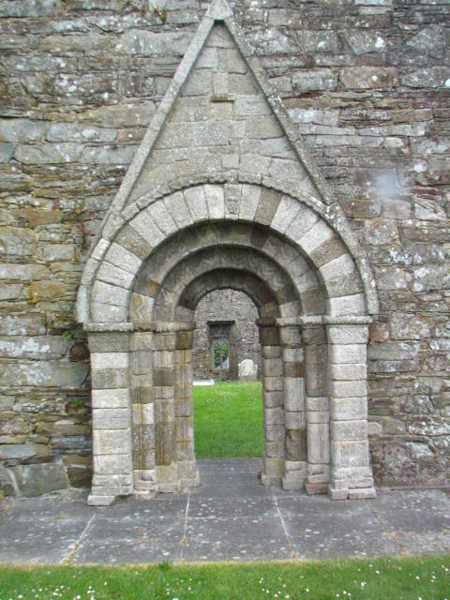
Romanesque doorway at Killeshin
Romanesque doorway at Killeshin. Resized for display. Photo: liam murphy ↗ · CC BY-SA 2.0

From research

Is this worth your time?

Choose Killeshin if you enjoy small architectural details that become more interesting the longer you look. The doorway’s receding arches, carved heads and inscriptions provide a clear theme for a short heritage stop. Use official interpretation to identify features, leaving uncertain personal names or meanings as possibilities rather than inventing a complete story.

Know before you book: This is an unguided historic place with uneven ground and fragile fabric. Respect current barriers, burial areas and the permitted approach; do not climb.

Place highlights

What you will actually see

01

Receding arches

Look at the doorway’s four orders and notice how the carved entrance creates depth within the wall. Let your eyes move across the surfaces without touching them. Different weather and light can make particular details easier or harder to distinguish.

02

Heads and animals

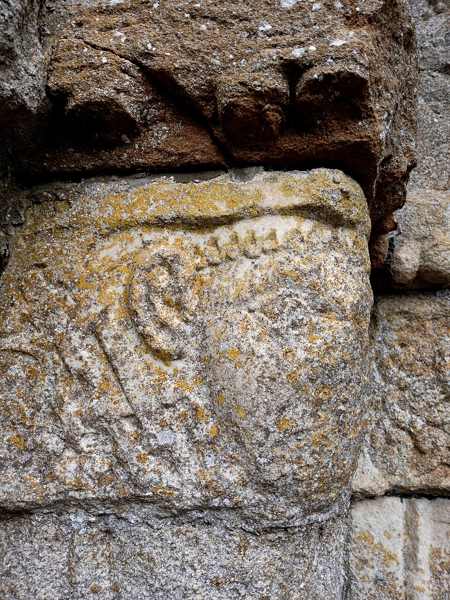
Compare the human heads and animal forms around the entrance. Their variety makes a slow look worthwhile. Do not make rubbings, trace the carving with fingers or move onto masonry to obtain a closer photographic angle.

03

The church ruin

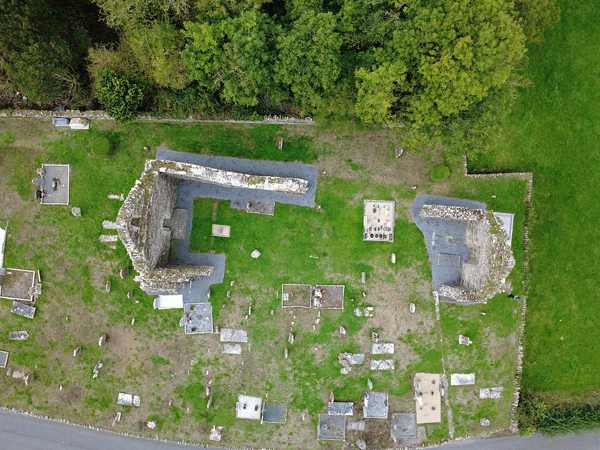
Step back on secure ground to relate the doorway to the surviving nave and chancel. The entrance is part of a building that changed over time, rather than an isolated sculpture placed in the landscape. Respect graves and current access boundaries.

The story behind the visit

The story behind the place

OPW identifies the church as a notable example of twelfth-century Romanesque architecture. Its western doorway includes several receding arches with human and animal carving, providing a concentrated example of skilled stonework. Looking from the broad shape to the smaller details helps explain the design without needing specialist terminology. The variety of faces, hair and animal forms gives the entrance its character, while the wider church preserves a more fragmentary record of its original architectural setting. Source ↗

Two inscriptions add another layer to the doorway. OPW records a prayer for Diarmait, King of Leinster, and a second name, Cellachan, possibly associated with the stonework. That proposed role should remain a possibility rather than a certain biography. The church also contains later changes, including alterations to its east window, so the surviving ruin does not represent one unchanging moment. A careful visit can bring together patronage, craft and later use while leaving the carved surfaces and surrounding burial place undisturbed. Each supporting pillar carries a distinctive head, while animal and bird carving appears within the doorway’s orders. Comparing their forms is more useful than assigning every figure an unsupported symbolic meaning. Source ↗

Visitor information

Tickets, timing and access

Opening
Visit in daylight and follow current local access notices.Confirm with the operator ↗
Admission
No staffed admission product is advertised; check any current local arrangements.Confirm with the operator ↗
Booking
Independent viewing has no scheduled departure; arrange specialist guiding separately.Confirm with the operator ↗
Access
Stay on the permitted visitor route; leave masonry and carved surfaces untouched.Confirm with the operator ↗
Duration
Allow about 45 minutes for the monument and its immediate setting.Confirm with the operator ↗
Seasonal
Wet surfaces and short daylight can affect the visit; wear suitable shoes.Confirm with the operator ↗

Getting to the entrance

Use the signed Killeshin church approach in County Laois. The OPW mapped point locates the monument; follow the current entrance signs. Official visitor information ↗

Your questions, answered

Confirm current access and visitor arrangements with the operator.

May I touch the doorway to trace the figures?

No. Observe or photograph without touching, rubbing or climbing the carved stone. Source ↗

Is every part of the church twelfth century?

No. OPW records later alterations as well as the Romanesque doorway. Source ↗

Nearby options

Nearby places to explore

Explore other places in the area, then use live directions to plan your journey.

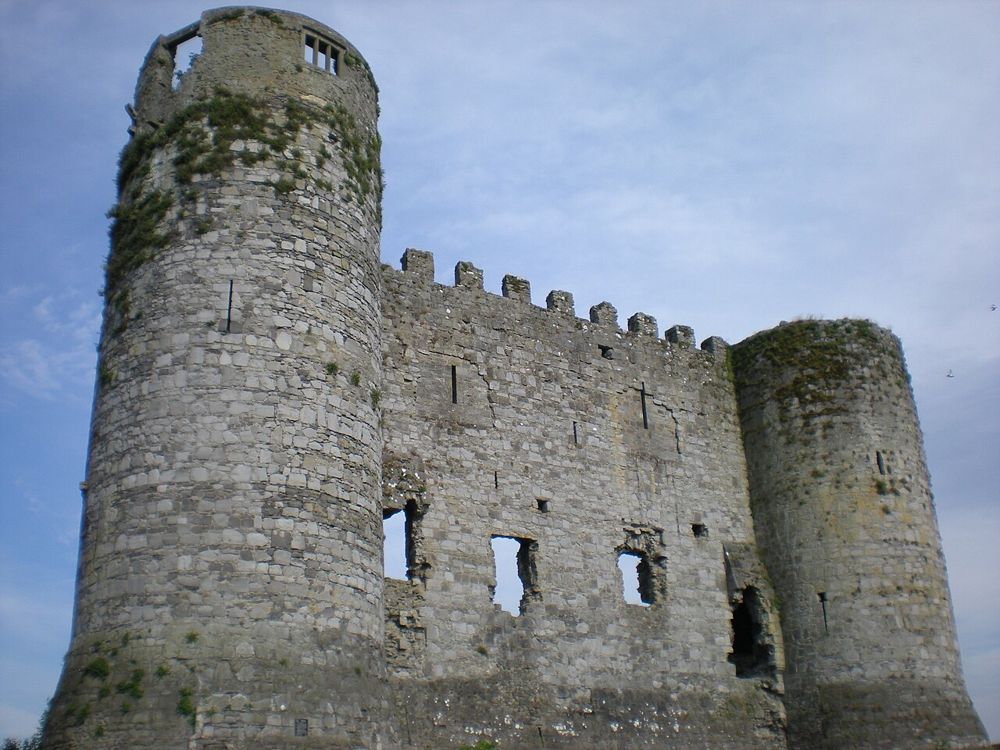
The surviving wall and towers of Carlow Castle
The surviving wall and towers of Carlow Castle. Resized from the credited source photograph; conditions and access may have changed. Photo: Age Bosma ↗ · CC BY-SA 3.0

heritage

Carlow Castle

Carlow Castle is a fragment with presence: a tall surviving wall and rounded towers beside the Barrow, rather than a complete building you can explore room by room. It is worth seeing on a town walk, provided…

Open place page →
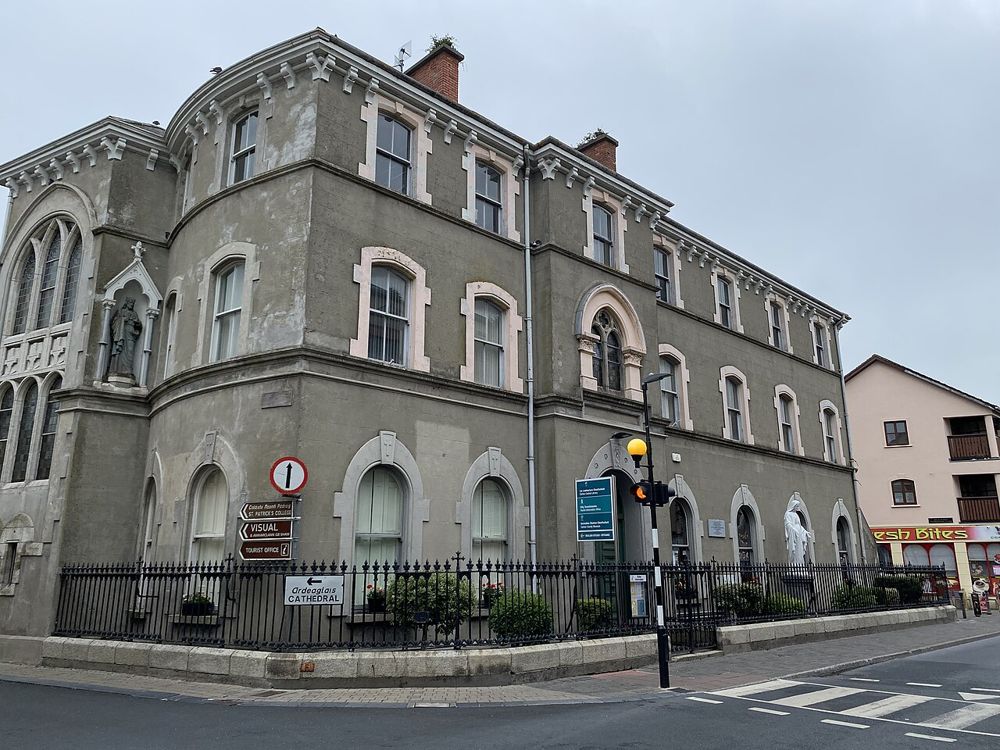
The exterior of Carlow County Museum
The exterior of Carlow County Museum. Resized from the credited source photograph; conditions and access may have changed. Photo: 瑞丽江的河水 ↗ · CC BY-SA 4.0

attraction

Carlow County Museum

The County Museum is a useful answer to the question of what Carlow adds beyond a few scattered ruins. Its objects pull the county’s religious, working and political history into one manageable indoor visit.…

Open place page →
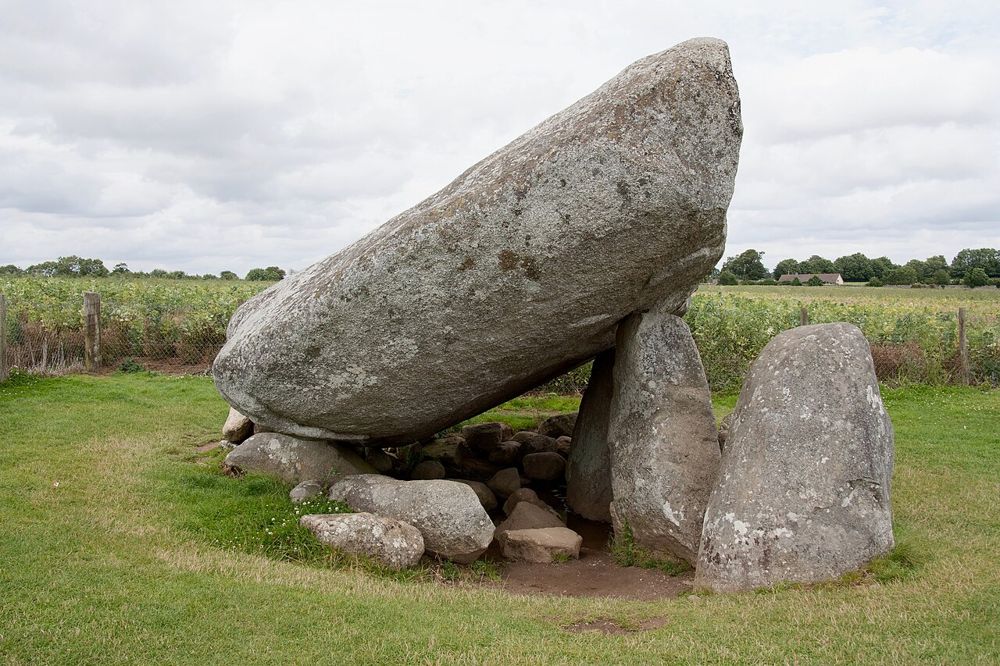
The huge capstone and supporting stones of Brownshill Dolmen
The huge capstone and supporting stones of Brownshill Dolmen. Resized from credited source. Photo: Elliot Tucker ↗ · CC BY-SA 4.0

heritage

Brownshill Dolmen

Brownshill is one of those stops that becomes more impressive as you get closer. From the road it can read as a low group of stones; beside it, the enormous sloping capstone changes the scale. The useful…

Open place page →
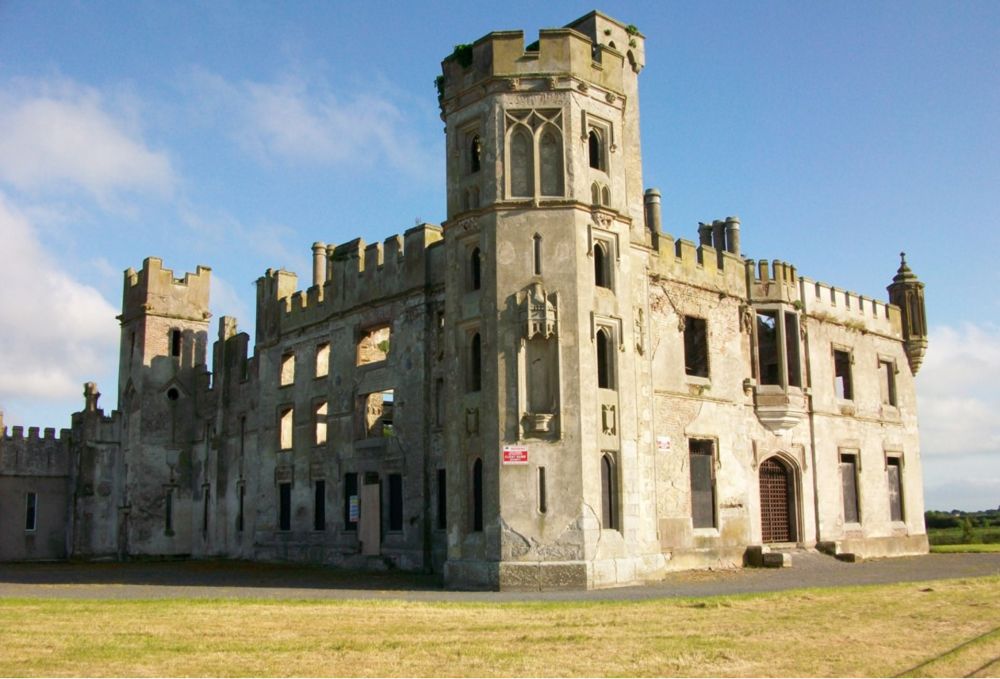
The ruined Gothic mansion at Duckett’s Grove
The ruined Gothic mansion at Duckett’s Grove. Resized from credited source. Photo: Irlandahijo ↗ · CC BY-SA 3.0

heritage

Duckett’s Grove

Duckett’s Grove is all silhouette: turrets, tall windows and a mansion that looks more medieval than its history actually is. The ruined house makes the first impression, but the restored walled gardens give…

Open place page →
Fallow deer in the walled garden at Castlecomer Discovery Park
Fallow deer in the walled garden at Castlecomer Discovery Park. This setting photograph does not show the bookable adventure activities. Resized from the credited original. Photo: Laurel Lodged ↗ · CC BY-SA 4.0

attraction

Castlecomer Discovery Park

Castlecomer works best when you choose the kind of day you want before arriving. Woodland walking and a courtyard pause are one visit; high ropes and other bookable activities are another. The setting can…

Open place page →

External visitor reviews

Find the matching listing and reviews on Google Maps ↗

Part of a bigger journey

Location & access

Getting your bearings

This is an unguided historic place with uneven ground and fragile fabric. Respect current barriers, burial areas and the permitted approach; do not climb.

52.84744, -7.00131 · Reference point; confirm the correct entrance and access. Map © OpenStreetMap contributors.

Orientation only: a verified public entrance is not established by this pin. Use the operator arrival information before travel.

Sources & place context

Browse more Ireland places →