From research
Is this worth your time?
Choose it for an introduction to medieval Clondalkin that connects a visible landmark with interpretation at a manageable scale. Look at the tower first, then use the exhibition to place it within the former monastery and the later village. Allow time to return outside afterwards: a doorway, window or proportion may mean more once you know the context.
Know before you book: The published visitor experience is the exhibition, gardens and ground-level monument setting. It does not include an advertised tower-climbing tour.
The story behind the visit
The story behind the place
The monastery at Clondalkin is associated with St Crónán Mo-Chua and an early medieval foundation, while the surviving round tower belongs to a later phase of the site’s history. The operator’s interpretation treats the tower as roughly a thousand years old. Keeping those two dates separate matters: the age of a religious settlement is not automatically the construction date of every building that survives within it. The exhibition provides a way to connect the visible monument with that longer development. Source ↗
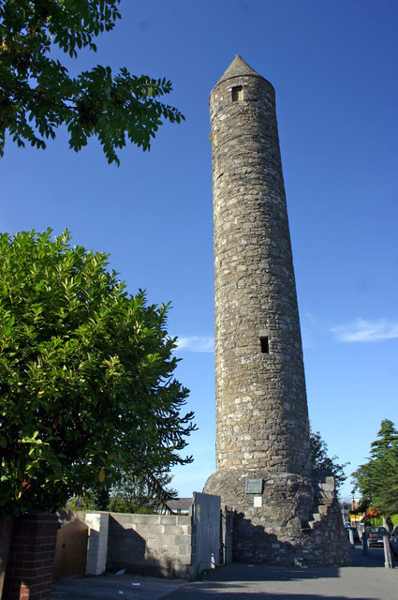
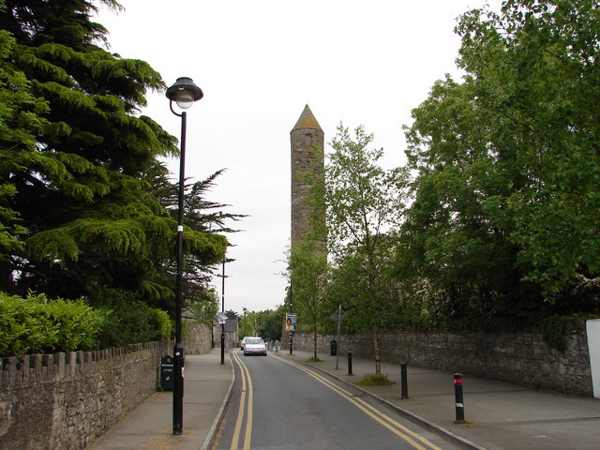
The tower stands about 27.5 metres high, with a raised doorway and upper windows facing in different directions. Its original internal levels were connected by ladders. The operator presents a bell-tower function as likely while acknowledging uncertainty about the full range of uses. That makes the building a useful place to think about how historic structures are interpreted from limited evidence. The modern visitor centre broadens the picture beyond the tower itself, bringing later Clondalkin into view and showing how a village continued to develop around an enduring landmark. Source ↗